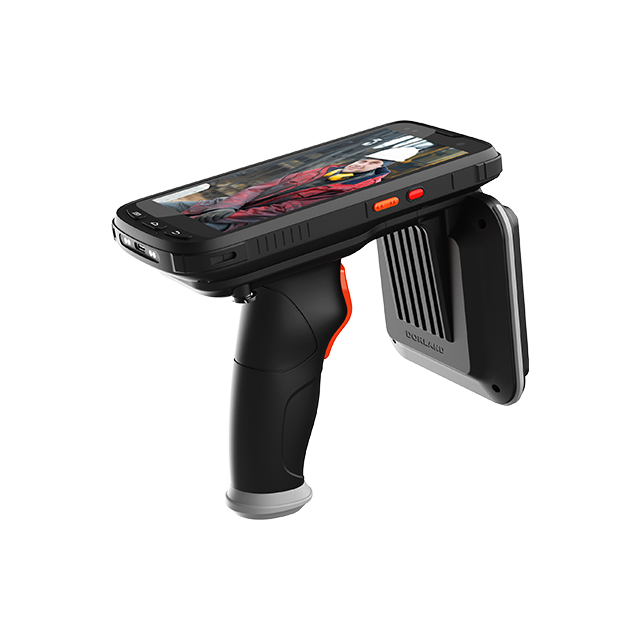
Tank farm environments present extreme stakes for industrial operators. Highly explosive petrochemical vapors constantly mingle with rigorous OSHA scrutiny regarding confined space entry. Every manual inspection carries inherent fatal risks. A single static discharge can trigger a catastrophic event. Facilities are now shifting rapidly away from traditional manual data logging. They are eliminating hazardous scaffolding-based visual inspections. Instead, EHS leaders embrace fully digitized, "zero-entry" workflows driven by connected mobile hardware. This transition eliminates unnecessary human exposure while boosting operational data accuracy.
This guide provides EHS managers and operational leads with a pragmatic evaluation framework. We explore how to deploy Intrinsically Safe PDAs, cameras, and robotic systems effectively. You will discover robust methods to maximize safety, compliance, and immediate digital ROI. We show you how to implement these changes without disrupting your existing daily workflows.
Key Takeaways
Zero-Entry Feasibility: Replacing manual confined-space entry with remote visual inspection (RVI) cameras drastically reduces compliance overhead and fatal incident risks.
Data Centralization: Intrinsically Safe PDAs act as the missing link in the field, unifying barcode/RFID scanning, visual capture, and real-time ERP synchronization in Zone 1/Division 1 environments.
Standardized Evaluation: Device procurement must strictly align hardware certifications (ATEX/IECEx/NEC) with specific hazard zones (Zone 0/1/2) while accounting for workflow limitations (e.g., push-cable flexibility, battery lifecycle).
Hidden ROI: Beyond operational efficiency, certified mobile ecosystems frequently yield measurable returns through lowered corporate insurance premiums and reduced audit-preparation downtime.
The Business Case: Framing the Cost of Compliance vs. Digital ROI
Traditional tank farm inspections carry heavy financial and operational burdens. OSHA mandates strictly govern any confined space entry under standards like 1910.146. You must deploy a minimum of two-person teams. These teams often include a dedicated rescue standby crew. Facilities must secure specialized entry permits and erect expensive scaffolding inside the vessel. Often, tanks require mandatory draining, purging, and cleaning beforehand. These preparation steps consume days of operational time before a human inspector even enters the space.
Safety directly translates into a quantifiable financial metric. Incident investigations cause massive hidden costs and facility downtime. An unexpected spark from an uncertified radio or flashlight can halt operations for weeks. Intrinsically safe equipment limits thermal and electrical ignition sources. This proactive stance prevents catastrophic accidents and subsequent investigations entirely.
Adopting a certified mobile ecosystem provides clear insurance and audit advantages. Verifiable risk-mitigation strategies strongly appeal to underwriters. Facilities often negotiate lowered corporate insurance premiums because they can prove hazardous exposure reduction. Digital devices also simplify compliance audits via timestamped digital trails. When an inspector usesIntrinsically Safe PDAs to log valve conditions, the data syncs securely. EHS teams prove compliance instantly without deciphering illegible paper logs.
Core Device Categories for Modern Tank Farm Inspections
Intrinsically Safe PDAs: The Field Connectivity Hub
Intrinsically Safe PDAs serve as much more than simple communication tools. They act as vital edge computing nodes directly at the tank base. Workers use them for asset tracking via integrated NFC and RFID scanners. They enable secure digital permitting by logging operator signatures in real time. They ensure immediate ERP database synchronization without forcing workers back to a safe zone.
You move operations away from fragmented paper checklists. Instead, operators follow guided, software-driven digital SOPs. This guarantees accurate, mandatory data capture inside Division 1 environments. The PDA becomes the central hub connecting the field worker to the broader enterprise network.
Remote Visual Inspection (RVI): Borescopes, T-Poles, and Push Cameras
Remote Visual Inspection (RVI) hardware adapts specifically to complex tank geometry. Articulating borescopes navigate dense valve networks. They offer 360-degree viewing inside extremely small pipelines. T-pole mounted cameras span wide man-ways. They provide steady, high-resolution visual stability without requiring a technician to lean dangerously into the tank. Push cameras feed deep into connected pipeline systems to locate hidden blockages or interior corrosion.
However, EHS leads must set realistic expectations. Push cameras face distinct physical limitations. Friction increases significantly in tight pipe bends. Cable lengths eventually max out over long horizontal runs. You must know when to pivot to alternative inspection tools. Understanding these limitations prevents equipment damage and lost inspection time.
Robotic Integration for High-Risk Zones
Facilities increasingly adopt robotic integration for their highest-risk zones. Automated crawlers, often equipped with magnetic wheels, climb vertical tank walls effortlessly. These platforms converge with Class I Div 1 explosion-proof cameras. They perform continuous 24/7 inspections and facilitate automated tank cleaning.
This approach entirely removes human presence from the hazard zone. You achieve a true zero-entry operational standard. Robots gather uninterrupted asset data. They transmit high-definition video back to operators situated securely in remote control rooms.
Deciphering Certifications: Matching Hardware to Hazard Zones
Engineers distinguish carefully between intrinsically safe and explosion-proof designs. Intrinsically safe technology restricts internal electrical energy. It prevents the device from generating heat or sparks above specific ignition thresholds. The device physically cannot ignite the surrounding atmosphere, even if dropped or damaged.
Explosion-proof designs take a completely different engineering approach. They contain any internal blast using heavily ruggedized, sealed metal housing. They allow an internal spark to occur but prevent the resulting flame from escaping into the hazardous atmosphere. You must precisely map specific hardware standards to your tank farm areas.
Hazard Area Classification
Environmental Gas Presence
Required Hardware Engineering Standard
Zone 0 / Class 1 Div 1
Continuous or highly likely presence of explosive gas (inside the tank).
Requires maximum certification (ATEX Zone 0 / IS rating).
Zone 1 / Class 1 Div 1
Gas likely during normal operations (vents, active pumping areas).
Zone 1 / Class 1 Div 1 certified devices.
Zone 2 / Class 1 Div 2
Gas present only under abnormal conditions (perimeter storage).
Zone 2 / Class 1 Div 2 certified devices.
A strict procurement warning matters greatly here. We strongly advise against "over-specifying" your hardware. Buying costly Zone 0 devices for Zone 2 perimeter areas drains critical budget unnecessarily. Conversely, "under-specifying" creates a catastrophic safety failure. Taking an unrated device into a Zone 1 environment risks immense explosion hazards. Always match the exact certification to the defined environmental risk. Deploy certified Intrinsically Safe PDAs matched directly to your facility's hazard map.
Establishing the Standard Operating Procedure (SOP) and Defect Criteria
A digital workflow only succeeds if supported by rigorous Standard Operating Procedures (SOPs).
Pre-Inspection Planning: Workers must meticulously check device integrity before crossing into the hot zone. They should inspect battery seals and verify IP67+ housing integrity against petrochemical corrosion. A compromised seal invalidates the intrinsic safety rating immediately.
Defect Identification Checklist: Standardize what field workers capture using their connected devices. You should train them to log specific defects:
Surface corrosion patterns on inner tank walls.
Micro-cracks developing along stressed joints or structural seams.
Weld integrity degradation caused by prolonged chemical exposure.
Residue buildup or dangerous scale deposits.
Data Processing and AI Standards: Facilities must integrate captured field data with standardized coding frameworks. Using frameworks like MACP ensures industry-wide consistency. AI-assisted analysis processes this visual data rapidly in the cloud. It identifies microscopic degradation patterns invisible to the human eye. This pushes operations toward predictive maintenance rather than reactive, emergency patching.
Strict Red-Lines (Don'ts): Operational rules require strict, uncompromising enforcement. We establish clear boundaries for any designated explosive zone:
Never swap or remove device batteries inside the hazardous area.
Do not expose open USB ports, headphone jacks, or charging contacts.
Never perform physical device modifications or field repairs within the designated explosive zone.
Shortlisting Logic: How to Evaluate Vendor Solutions
Evaluating vendors requires looking far past basic hardware specifications.
Integration over Specifications: Prioritize devices that seamlessly support enterprise Mobile Device Management (MDM). They should bridge gapless data into your existing software ecosystems. An isolated device creates frustrating data silos. Your chosen hardware must synchronize smoothly with SAP, Maximo, or proprietary maintenance systems. Software compatibility ultimately determines the true utility of the device in the field.
Ergonomics and Usability: Usability heavily impacts daily worker adoption. Evaluate glove-touch compatibility for workers wearing thick, protective PPE. Check screen legibility in direct sunlight. High nit brightness ensures workers can read digital checklists outdoors without squinting. Physical balance matters deeply. Clunky, unbalanced devices increase operator fatigue during long shifts. This leads to dropped equipment and compromised safety.
Vendor Compliance Lifecycle: Vendor support dictates your long-term success. Ensure the manufacturer provides continuous compliance support and regular security updates. They must offer clear, certified paths for battery recertification and replacement. Robust warranty services tailored specifically to industrial wear-and-tear protect your capital investment. Select partners who deeply understand the regulatory demands of petrochemical environments.
Conclusion
Combining advanced mobile hardware with remote visual inspection tools completely transforms tank farm maintenance. You elevate routine checks from a high-risk compliance chore into a highly efficient, data-driven operational advantage. Adopting zero-entry strategies protects human life. It simultaneously accelerates the speed and accuracy of field data collection.
Decision-makers should take immediate, pragmatic steps to modernize their workflows. We recommend starting by thoroughly auditing your facility’s hazard zone maps. Establish exact certification boundaries first to avoid costly procurement errors. Once mapped, initiate targeted pilot programs with trusted device vendors. This approach validates workflow integration before a full-scale rollout.
FAQ
Q: What is the difference between an intrinsically safe PDA and a ruggedized tablet?
A: Ruggedized devices survive drops and water; intrinsically safe devices are engineered at the circuit level to prevent electrical sparks and thermal spikes that could ignite volatile gases.
Q: Can we use standard smartphones inside a Class 1 Div 1 area if they are turned off?
A: No. Uncertified devices carry latent battery energy and static discharge risks even when powered down. Only certified devices are permitted in Div 1 zones.
Q: How does using intrinsically safe cameras impact confined space entry permits?
A: By utilizing drop-cameras or pole-mounted systems, facilities can often achieve "zero-entry" inspections, entirely bypassing the need for complex, costly, and hazardous confined space permitting and rescue team standby.
Q: Are intrinsically safe PDAs compatible with standard enterprise asset management software?
A: Yes, modern IS PDAs typically run on standard Android or Windows OS, allowing seamless integration with ERPs, MDM platforms, and proprietary maintenance software via secure Wi-Fi or LTE.