In hazardous locations (HazLoc), a simple flashlight switch can be the ignition source for a catastrophic event. Sourcing lighting for oil refineries, chemical plants, or drilling rigs is a high-stakes compliance decision, not just a basic hardware purchase. A single spark from an uncertified device can ignite volatile gases or combustible dusts.
Procurement teams face a labyrinth of regional certifications. They must decode ATEX, IECEx, and UL standards while navigating complex marketing jargon. Furthermore, facility managers must match varying physical requirements to rigorous, real-world tasks.
This guide breaks down how to navigate complex safety ratings. You will evaluate emerging smart lighting technologies and build a clear decision matrix. We will help you select intrinsically safe lighting guaranteeing compliance without sacrificing your operational efficiency.
Key Takeaways
Compliance is geographically bound: An intrinsically safe certification valid in Europe (ATEX) may carry legal and insurance risks if deployed in the US without UL, FM Global, or CSA approval.
Intrinsic safety ≠ Explosion-proof: Understand the engineering difference between preventing sparks (low energy) and containing blasts (heavy enclosures). Handheld tools must be the former.
Lumens don't dictate visibility: In hazardous environments with steam or particulate matter, candela (beam intensity) and beam profile dictate usability more than raw lumen output.
Smart tech is entering HazLoc: A modern smart flashlight offers digital battery telemetry and safety beacons, but these features must still strictly adhere to low-energy encapsulation standards.
Decoding the Compliance Matrix: Matching Flashlights to Your Hazardous Location
Safety regulations are not universal. Establishing an authoritative framework for legal and safety compliance requires you to understand regional codes. You must align device ratings directly with your facility's specific hazards.
North American Standards (NEC/NFPA 70)
In the United States and Canada, the National Electrical Code (NEC) uses a Class, Division, and Group system. This system identifies the nature and probability of hazardous materials.
Class: This identifies the physical material type. Class I designates gases and vapors like petroleum. Class II covers combustible dusts. Class III involves easily ignitable fibers.
Division: This evaluates hazard probability. Division 1 means hazards are present during normal operations. Division 2 means hazards exist only under abnormal conditions, such as a pipe leak.
Group & T-Code: Groups categorize specific substances from A to G. Furthermore, you must verify the Temperature Code (T-Code). A flashlight’s T-Code (T1-T6) must run cooler than the lowest ignition temperature of surrounding gases. For example, gasoline ignites at 536°F. Therefore, you require a device rated T2A or better to operate safely.
Global & European Standards (ATEX & IECEx)
European and international worksites use the Zone system. This framework defines hazards through time-based exposure metrics rather than probability assumptions.
Zone 0: Hazards are present continuously or for long periods (exceeding 1000 hours per year).
Zone 1: Hazards are likely to occur occasionally during normal operations (10 to 1000 hours per year).
Zone 2: Hazards are not likely to occur, or exist only for a short time (1 to 10 hours per year).
Regulatory Comparison Chart
Hazard Probability
North American System (NEC)
Global/European System (ATEX/IECEx)
Continuous/Long-term presence
Class I, Division 1
Zone 0
Occasional/Normal operation presence
Class I, Division 1
Zone 1
Rare/Abnormal condition presence
Class I, Division 2
Zone 2
The Legal Reality of Regional Certifications
Implementation risks arise when procurement teams ignore geography. A device carrying only PCEC or standard CE marks will face compliance failures in North America. US worksites require rigorous testing by recognized laboratories. You must look for marks from FM Global, CSA Group, or UL. Similarly, Australian sites must verify AS/NZS compliance. Ignoring these legal borders invites severe regulatory penalties.
Intrinsic Safety vs. Explosion Proof: A Crucial Procurement Distinction
Industrial buyers often confuse intrinsic safety with explosion-proof design. This dangerous technical misconception can lead to incorrect equipment deployments in hazardous zones.
Intrinsic Safety (Prevention Focus)
Engineers design intrinsically safe devices to prevent ignition entirely. The goal is limiting electrical and thermal energy below the threshold required to ignite a specific atmospheric mixture. Manufacturers achieve this using low-voltage circuits, strict temperature control, and completely encapsulated electronics. Because they prevent sparks from occurring, this remains the universal standard for portable lighting. When you purchase an intrinsically safe flashlight, you buy preventative technology.
Explosion Proof (Containment Focus)
Explosion-proof equipment relies on containment rather than prevention. Designers build heavy enclosures using cast aluminum or stainless steel. These rugged housings withstand an internal explosion. They contain the blast and prevent it from igniting the external atmosphere. Facilities reserve explosion-proof designs for large, fixed equipment like motors or permanent lighting fixtures. Handheld flashlights do not use explosion-proof enclosures due to excessive weight.
The Role of the Intrinsically Safe Smart Flashlight in Modern Worksites
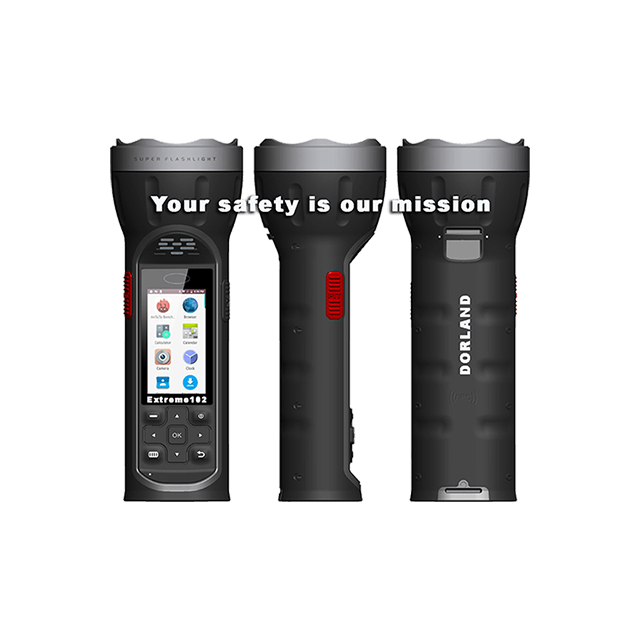
As the Internet of Things (IoT) scales across heavy industry, basic hardware requires upgrades. The modern intrinsically safe Smart Flashlight bridges the gap between illumination and digital safety networks.
Evaluating Connected Capabilities
Advanced lighting does more than cut through darkness. Intelligent devices protect workers operating in remote or isolated zones. They feed critical data back to safety managers while maintaining strict energy limits.
Key Smart Features to Assess
Battery Telemetry: Digital fuel gauges provide real-time runtime estimates. They prevent unpredictable power loss during critical confined space entries.
Automated Safety Beacons: Integrated accelerometers detect sudden impacts or lack of movement. They trigger "man-down" alerts or automate SOS strobes.
Proximity and Light Sensors: Auto-dimming capabilities save battery life. They also reduce blinding glare when workers read highly reflective metallic gauges.
The Compliance Caveat
You must practice caution when adopting connected tools. Ensure added smart capabilities do not compromise device safety. Bluetooth radios, digital screens, and microprocessors draw power. They must strictly adhere to the energy-limiting and anti-static casing requirements of the device's original HazLoc certification. Always verify IoT features share the same compliance rating as the main light unit.
Essential Performance Metrics Beyond "Lumens"
Procurement teams often rely on basic marketing specifications. However, real-world operational requirements demand a deeper look at specific performance metrics.
Candela vs. Lumens
Avoid the common "high lumen" trap. High lumens measure total light output, but they lack directional focus. In environments heavy with smoke, steam, or particulate matter, unfocused light creates blinding backscatter. You must evaluate candela instead. Candela measures peak beam intensity and penetration. High candela values guarantee you can pierce through dense industrial fog safely.
Durability and IP Ratings
An intrinsically safe rating prevents explosions. It does not automatically mean the device is indestructible. You must evaluate Ingress Protection (IP) ratings carefully.
Look for IP67 or IP68 ratings to guarantee dust-proof and waterproof performance.
Demand anti-static housing materials. Standard plastics can generate friction sparks when rubbed against industrial fabrics.
Check lens materials for chemical resistance against harsh refinery solvents.
Ergonomics for Industrial Realities
Workers handle tools under extreme physical constraints. Ergonomics dictate daily usability. Require oversized, tactile switches operable while wearing thick, heavy chemical gloves. Mandate anti-roll body designs. An anti-roll shape prevents vital tools from dropping off elevated catwalks. Finally, evaluate battery constraints. Determine if the unit requires proprietary certified rechargeable packs. Alternatively, check if it mandates specific brands of AA batteries to maintain its strict safety rating.
Scenario-Based Selection: Matching Tools to Oil, Gas, and Chemical Tasks
Building a practical shortlisting logic requires you to evaluate specific industrial applications. Different zones demand completely different lighting profiles.
Confined Space Entry (Tanks/Vessels)
Inspecting empty storage tanks introduces unique hazards. Workers need visibility both ahead and below. Prioritize right-angle dual-beam lights for these tasks. These models cast a simultaneous spot and flood beam. They illuminate distant structural walls while preventing trip hazards at the worker's feet.
Routine Plant Inspections
Maintenance personnel cannot afford to sacrifice one hand just to hold a flashlight. Opt for lightweight, intrinsically safe headlamps. Headlamps keep hands entirely free. Workers can safely carry heavy wrenches, manage high-pressure valves, or operate two-way radios without interruption.
Perimeter Security & Incident Response
Security teams patrolling expansive refinery yards face different challenges. They require maximum visibility across vast distances. Require high-candela, long-throw handhelds. These devices need extended runtimes and durable grips. They allow rapid sweeping of open areas during an emergency incident.
Common Procurement Misconceptions to Avoid
Safety managers must build trust by debunking dangerous myths. Establishing an evidence-based mindset prevents disastrous purchasing errors.
Myth 1: "LEDs are inherently safe because they don't get hot."
Reality: LEDs certainly operate cooler than legacy incandescent bulbs. However, the internal circuitry driving an LED can still arc, short, or spark. Temperature is only one factor. Electrical energy containment is equally vital. Dedicated third-party certification remains mandatory for all LED devices used in hazardous zones.
Myth 2: "We can modify a standard flashlight with seals."
Reality: Adding aftermarket O-rings or silicone seals to consumer flashlights is dangerous. DIY modifications immediately void any existing safety certifications. Using unauthorized replacement batteries alters the energy output profile. This introduces catastrophic legal and physical liability to your facility.
Myth 3: "A higher Zone rating covers all lower zones universally."
Reality: While Zone 0 equipment represents the strictest time-based safety standard, specific material groups still matter. Gas and dust groups differ significantly (e.g., IIA versus IIC). A flashlight certified for Zone 0 dust environments might lack approval for Zone 1 hydrogen gas areas. Granular matching to the specific facility hazard is an absolute requirement.
Conclusion
Safety in hazardous locations requires precise planning. You must align regional legal standards—such as UL and ATEX—with facility-specific classifications like Class, Division, and Group. Furthermore, you have to balance these rigid safety codes against real-world operational needs, including beam profile and physical ergonomics.
Audit the exact NEC or ATEX classification of your specific worksite zones immediately. Shortlist two to three fully compliant models. Consider testing both traditional lights and emerging smart flashlight options. Finally, conduct a controlled pilot program with a small maintenance crew. Test glove compatibility and monitor actual runtime before executing a site-wide purchase order.
FAQ
Q: Can I change the batteries of an intrinsically safe flashlight while in the hazardous area?
A: No. Always exit the hazardous zone to swap or charge batteries. Opening the sealed casing exposes the atmosphere to potential electrical contacts. This breaks the encapsulation and invites instant ignition risks.
Q: Why does my intrinsically safe flashlight specify particular battery brands?
A: Certification tests are conducted using specific battery chemistries and brands. Using off-brand batteries changes the energy output profile and immediately voids the safety rating. Always check the manufacturer manual.
Q: What is the difference between Division 1 and Division 2 flashlights?
A: Division 1 lights are certified for areas where explosive gases/dust are present during normal, everyday operations. Division 2 is for areas where hazards only exist under abnormal conditions (like a pipe leak or failure). Division 1 lights are universally safer but typically more expensive and lower in maximum output.