Chemical processing facilities operate with zero margin for error. Managing volatile compounds, high-pressure systems, and complex OT/IT networks requires frontline data collection to be accurate and flawlessly safe. Traditional paper processes and standard consumer mobile devices create severe liabilities for modern operators. They introduce massive data silos and delay critical risk reporting across the enterprise. Worse, they present potential ignition hazards in explosive atmospheres, putting both lives and infrastructure at peril. Relying on outdated methods puts personnel and entire facilities at extreme risk while failing to meet modern regulatory expectations. This guide provides a functional framework for evaluating and selecting certified hardware tailored specifically for harsh chemical environments. You will learn how to ensure strict compliance with EPA RMP (Risk Management Program) and OSHA PSM (Process Safety Management) standards. We will also explore how to deploy these digital tools effectively without sacrificing field usability or frustrating your frontline technicians.
Key Takeaways
Standard rugged devices are a liability in chemical plants; strict intrinsic safety (IS) certifications (e.g., ATEX, Class I Div 1/2) are mandatory for compliance and safety.
A functional chemical plant inspection device must combine explosion-proof hardware with true offline software capabilities to handle network blind spots (e.g., remote tank farms).
Successful deployment requires devices that support "forced SOPs" (like LOTO verification) and bridge the IT/OT convergence gap seamlessly.
Why Consumer and Standard Rugged Devices Fail in Chemical Environments
Operators often confuse "rugged" electronics with "intrinsically safe" hardware. This misunderstanding carries deadly consequences. Standard rugged devices withstand drops, heavy dust, and severe water ingress. They pass military-grade durability tests. However, they lack the specific internal engineering required to prevent sparking under fault conditions.
Intrinsic safety means the device cannot release sufficient electrical or thermal energy to ignite a hazardous atmospheric mixture. An ordinary rugged tablet might survive a ten-foot fall onto concrete. Yet, its internal battery could arc if damaged, triggering a catastrophic explosion in a vapor-rich zone. You cannot afford to introduce ordinary electronics into areas handling volatile organic compounds.
Paper-based operator rounds and uncertified "shadow-IT" devices also fail OSHA Process Safety Management (PSM) audits. Auditors demand indisputable, time-stamped digital audit trails to prove regulatory adherence. Paper logs invite human error and manipulation. Technicians might "pencil-whip" forms, hastily signing off on physical checks they never actually performed. Shadow-IT devices—unauthorized personal smartphones used for quick photos—leave no secure, verifiable record. Digital platforms force total accountability. They prove exactly when, where, and by whom an operator performed a critical check.
Furthermore, the environmental reality of a chemical plant destroys consumer-grade hardware rapidly. Facilities experience extreme temperature fluctuations and handle highly corrosive compounds like sulfuric acid or caustic soda. Technicians wear heavy personal protective equipment (PPE), including thick nitrile gloves and face shields. Consumer screens simply fail to register touch inputs under industrial gloved use. Exposed charging ports degrade rapidly when constantly exposed to airborne corrosive gases. Plant environments demand specialized engineering far beyond basic consumer ruggedization.
Core Evaluation Criteria for a Chemical Plant Inspection Device
Selecting appropriate mobile hardware requires strict adherence to industry regulations and field realities. You must evaluate devices against three primary criteria before deploying them to your frontline teams.
Hardware selection must strictly align with your facility’s classified hazardous areas. You cannot deploy generic hardware in a Zone 1 environment. Devices must carry specific intrinsic safety certifications like ATEX, IECEx, or NEC. Evaluate the precise zone requirements for your plant. Do you operate in Zone 0, where explosive gases are continuously present? Do you operate in Zone 1 or 2? Do you follow North American Class I, Division 1 or Division 2 standards?
Safety managers must verify these certifications rigidly before procurement. Using a Zone 2 device in a Zone 1 area violates safety protocols entirely and voids corporate insurance policies. Always match the hardware certification to the most hazardous environment the technician might enter during their shift.
Best Practice: Conduct a comprehensive site audit to map every hazardous zone. Create a color-coded hardware matrix to ensure technicians only check out devices rated for their specific assigned sectors.
Field Ergonomics and PPE Compatibility
A device is practically useless if operators cannot operate it while wearing mandatory protective gear. Touchscreens must support advanced wet-tracking technology. They must respond accurately when operators wear thick industrial gloves or when rain covers the display. You should also evaluate screen luminance. Outdoor processing units subject workers to blinding direct sunlight. The display needs high nit ratings (typically over 400 nits) to remain readable.
Hardware designers should include dedicated physical buttons. Features like Push-To-Talk (PTT), SOS emergency alarms, and programmable barcode scanner triggers reduce screen reliance. Physical buttons allow operators to perform critical actions instantly without removing their gloves or struggling with complex digital menus during an emergency.
True Offline Architecture
Chemical plants contain massive connectivity blind spots. Remote storage tanks, underground pump stations, and dense metal distillation columns block Wi-Fi and cellular signals entirely. Your chosen hardware must function independently of real-time network access.
The device must support localized data caching natively. This allows technicians to execute complex inspection routes uninterrupted. They can log pressure readings, capture high-resolution photos, and verify Lockout/Tagout (LOTO) tags completely offline. The system then syncs this cached data automatically upon network reconnection. Without true offline capabilities, mobile deployments fail completely in heavy industrial zones, causing severe worker frustration.
Matching the Device to the Workflow: Smartphones, PDAs, and Cameras
Different maintenance workflows require distinct hardware form factors. One size does not fit all in industrial asset management. You must match the device to the specific operational task to maximize efficiency.
The Intrinsically Safe Smartphone
This device acts as the central digital hub for the modern connected worker. It is best suited for daily digital operator rounds, mobile team communication, and accessing CMMS/EAM systems directly from the plant floor.
When evaluating an intrinsically safe smartphone, look beyond the rugged exterior casing. Focus on enterprise-grade processors capable of running heavy asset management applications smoothly. Assess battery life carefully. The battery must last through a full 10-to-12-hour shift because you cannot swap batteries inside a hazardous zone safely. Mobile Device Management (MDM) compatibility is also crucial. IT teams need to push updates remotely, lock down permissions, and enable kiosk mode to prevent workers from accessing non-work applications.
The Intrinsically Safe PDA / Barcode Scanner
Inventory management and heavy asset tracking demand dedicated scanning hardware. An intrinsically safe PDA excels in high-volume logistical environments. It is best for managing spare parts inventory, tracking linear assets, and auditing IT/OT hardware like PLCs and SCADA servers.
Evaluate the integrated scanning engine closely. It must feature robust 1D and 2D laser scanners. These scanners must perform flawlessly in low-light conditions found in warehouses or basements. They need to read dirty, smudged, or partially damaged barcodes and RFID tags instantly. A standard smartphone camera struggles significantly in these conditions, making a dedicated PDA the superior choice for logistics and rigorous inventory control.
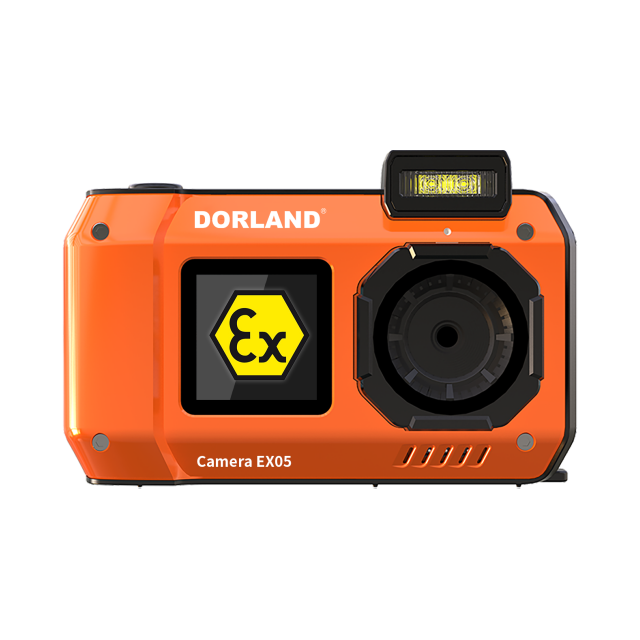
The Intrinsically Safe Digital Camera
Sometimes, a smartphone camera lacks the necessary optical detail for critical structural analysis. You need purpose-built optical equipment for rigorous visual inspections and metallurgical assessments.
This specialized tool is best for root cause analysis, detailed structural defect reporting, and visual regulatory compliance documentation. Look for a high megapixel count and advanced macro lens capabilities. Technicians need to inspect micro-fractures in high-pressure piping or evaluate weld integrity on pressure vessels. Additionally, ensure the device features a true xenon flash certified as safe for hazardous areas. Standard consumer flashes can ignite ambient gases. Certified cameras provide the indisputable visual evidence auditors demand without compromising site safety.
Device Type
Primary Operational Use Case
Key Hardware Evaluation Feature
Ideal Frontline User Role
Smartphone
Digital rounds, communication, remote CMMS access
Shift-long battery life, enterprise processor, MDM support
Dedicated 1D/2D laser scanner, RFID reading capabilities
Maintenance Planner / Logistics Staff
Digital Camera
Micro-defect documentation, root cause analysis
Macro lens focusing, IS-certified xenon flash
Reliability Engineer / Safety Inspector
Hardware-Software Synergy: Driving Outcomes at the Edge
Deploying certified devices solves only half the operational equation. The hardware must run software that actively drives better maintenance outcomes right at the edge of your operations.
Forcing Compliance via Actionable SOPs
Hardware remains only as good as the operational workflows it enforces. Standard operating procedures (SOPs) often live in thick binders located in the control room. Technicians rarely consult them during routine field tasks. Modern mobile devices seamlessly run software that prevents dangerous pencil-whipping.
They force strict step-by-step validation. For example, a technician cannot proceed to the next maintenance step without uploading a mandatory, time-stamped photo of a LOTO tag attached to a breaker. The system physically prevents task completion until the user satisfies all programmatic safety conditions. This digitization transforms passive suggestions into mandatory, auditable actions, ensuring regulatory compliance is built into the workflow.
Dynamic Data Capture and Real-Time Risk Mitigation
You must move from passive data entry to active, real-time intelligence. Use these edge devices to capture sensor anomalies instantly. Technicians can also record invaluable tribal knowledge via secure voice-to-text features while inspecting equipment.
When a worker notices an unusual vibration or a faint odor near a pump, they log it immediately into the mobile interface. AI-backed backend systems analyze this incoming data continuously. They cross-reference historical failure modes to predict repair times accurately. The central system can then pre-order necessary spare parts before the pump actually experiences catastrophic failure. This software-hardware synergy prevents expensive unplanned downtime.
Managing Linear Assets and Complex Groupings
Chemical plants utilize miles of complex piping networks. Managing these linear assets proves notoriously difficult using standard asset management tools. Mobile devices simplify this challenge through precise GPS tagging and localized grouping.
Technicians conduct partial inspections of long piping runs over several days. They tag specific valve locations geographically using the device's built-in sensors. The software groups these disparate assets into specific playbooks or logical inspection routes. This ensures partial condition data maps accurately back to the central ERP or CMMS architecture. It eliminates duplicate data entry and provides management with a unified, real-time view of complex asset health.
Implementation Realities: Mitigating Risks During Rollout
Rolling out new mobile technology introduces inevitable operational friction. Technicians used to old methods will naturally resist change. Planning your implementation carefully guarantees better adoption rates and ensures enterprise security remains intact.
Overcoming Frontline Resistance
Technicians will reject devices that slow them down unnecessarily. If a digital form takes longer to complete than a traditional paper one, they will find creative workarounds. You must prioritize devices with high usability and intuitive software interfaces.
Conduct targeted pilot programs with your veteran operators before launching plant-wide. These experienced workers will tell you bluntly if the user interface matches the harsh reality of the floor. Incorporate their feedback to refine digital workflows. When frontline workers feel heard and see that the tool genuinely makes their job easier, they champion the new technology rather than fighting it.
Common Mistake: Do not simply copy a paper form into a digital screen. Redesign the workflow to take advantage of mobile features like drop-down menus, auto-fill dates, and barcode scanning to save the technician's time.
MDM and Enterprise Security Integration
Certified mobile devices operate within highly sensitive OT environments. They must strictly meet rigid corporate IT security standards. Evaluating hardware requires looking deeply at backend control mechanisms.
Assess the ease of deploying over-the-air firmware updates. IT administrators must manage security patches promptly to protect against emerging software vulnerabilities. Use Mobile Device Management (MDM) software to restrict application installations. Whitelist only essential enterprise apps needed for the job. This approach prevents technicians from downloading unapproved consumer software, effectively blocking malware introduction into your sensitive OT networks. Strong IT/OT convergence requires rigorous, non-negotiable digital hygiene.
Follow these essential implementation steps to ensure smooth adoption:
Map all hazardous zones precisely to match specific device certifications.
Identify a core group of veteran operators to lead the initial pilot phase.
Configure your enterprise MDM platform to sandbox approved apps securely.
Deploy the devices on a single, low-risk workflow initially to test network sync.
Gather structured feedback and adjust the software interface accordingly.
Conclusion
The transition from reactive maintenance to predictive asset management relies entirely on the accuracy of data captured at the operational source. Implementing certified mobile technology closes the dangerous gap between the field and the central control room. It eliminates the hazards of inaccurate paper trails and the extreme dangers of uncertified electronics in explosive zones.
Take these actionable steps to begin your digital safety transformation:
Audit your current EAM/CMMS software to verify its true offline mobile capabilities before purchasing hardware.
Map your facility’s hazardous zones clearly to determine precise ATEX or North American Class/Div requirements.
Evaluate your daily plant workflows to decide where smartphones, dedicated PDAs, or digital cameras fit best.
Launch a targeted pilot program with your most experienced frontline operators to test hardware ergonomics and software usability.
FAQ
Q: What is the difference between an intrinsically safe and an explosion-proof device?
A: Intrinsically safe devices prevent ignition by limiting internal energy output so a spark cannot possibly occur, even under fault conditions. Explosion-proof enclosures allow an internal explosion but contain it completely inside a heavy casing, preventing it from igniting the outside atmosphere. Intrinsic safety is generally preferred and much more practical for lightweight mobile electronics.
Q: Will an intrinsically safe smartphone connect to our existing SAP/Maximo/ERP systems?
A: Yes, provided the device runs on a standard enterprise operating system like Android Enterprise. Your facility must utilize middleware or native API-driven applications. These apps support secure data transmission, ensuring operational data flows seamlessly between the frontline worker and your centralized backend architecture.
Q: How do we handle inspections in areas with zero Wi-Fi or cellular coverage?
A: You must select devices paired with true offline software architecture. Technicians download their assigned inspection routes prior to entering the dead zone. They capture data natively on the device. The system caches this information locally and automatically pushes the data to the cloud once network connectivity is safely restored.