Industrial operations face a massive core tension every day. Plant managers desperately need to reduce unplanned downtime. Unplanned equipment failures can cost sectors like oil and gas tens of millions of dollars annually. Urgent repairs demand immediate expert intervention. Yet, strict safety laws legally prohibit bringing standard consumer electronics into explosive environments. This creates a massive communication void.
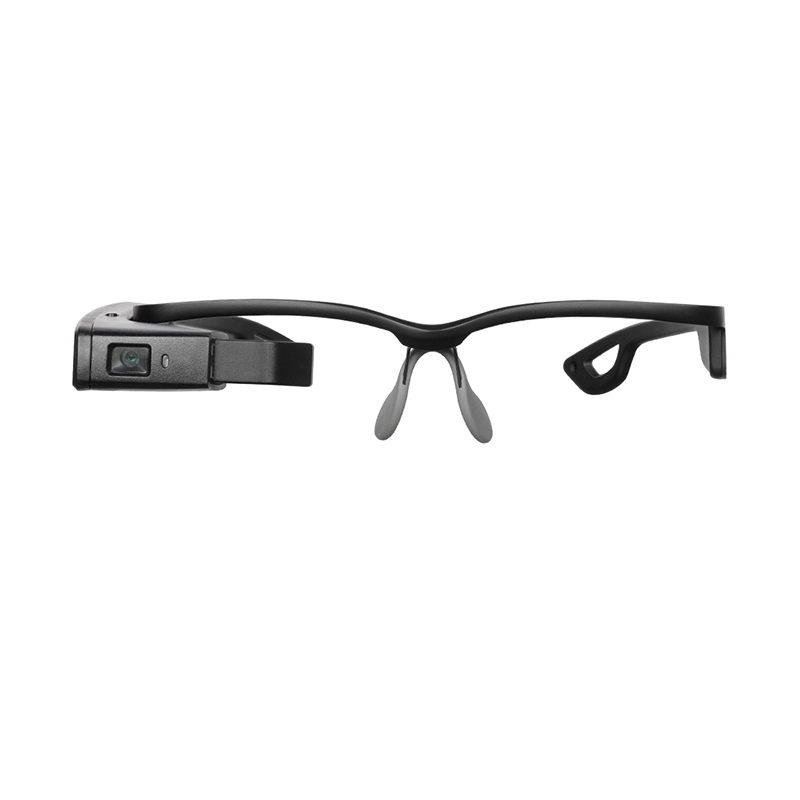
Enter Intrinsically Safe Smartglasses. These devices act as a critical bridge for "See-What-I-See" remote expert support. They successfully eliminate the physical gap separating specialized off-site knowledge from hands-on frontline execution. We designed this article to provide a comprehensive technical and commercial evaluation framework. You will learn how to select, justify, and deploy ATEX/IECEx-certified smart headsets safely. We will outline essential technical requirements and effective procurement strategies. This guide will ensure your digital transformation efforts succeed without compromising site safety.
Key Takeaways
Safety vs. Utility: True "intrinsic safety" (IS) requires fundamental hardware engineering (energy limitation, thermal management), not just ruggedized casing.
ROI Metrics: Deployments typically offset hardware costs through a 25–30% reduction in equipment downtime and thousands of saved expert travel hours.
Deployment Reality: Successful rollouts require addressing connectivity dead zones and frontline worker adoption hurdles, often favoring Hardware-as-a-Service (HaaS) bundling.
How Intrinsically Safe Smartglasses Re-engineer Remote Support
Traditional industrial workflows carry significant structural flaws. Facilities heavily rely on static paper manuals during emergencies. Technicians fumble over complex P&ID drawings in dark environments. Standard two-way radios fail to transmit complex visual context accurately. Consequently, companies must fly subject matter experts (SMEs) directly to hazardous locations. This reactive approach wastes precious hours, delays critical repairs, and drains annual travel budgets.
Hands-free wearables introduce a massive paradigm shift. They enable real-time visual collaboration directly from hazardous zones. The on-site technician effectively becomes the hands of the operation. The remote expert acts as the eyes and brain. They can annotate live video feeds, overlay digital instructions, and guide repairs step-by-step from miles away.
This "See-What-I-See" capability drives measurable industry outcomes. Facilities adopting intrinsically safe smart glasses consistently report specific operational gains:
Faster Onboarding: Training times decrease by 20-35% as new hires receive live coaching on unfamiliar equipment.
Rapid Troubleshooting: Diagnostic speeds improve by 30-40% through immediate remote expert intervention.
Error Reduction: Interactive AR checklists significantly reduce critical human error during routine maintenance tasks.
Decoding "Intrinsic Safety": Beyond Standard Ruggedization
Many buyers confuse basic ruggedization with intrinsic safety. Standard tablets and consumer AR headsets pose massive ignition risks. They utilize high-draw batteries highly prone to overheating under stress. Their internal RF antennas can generate microscopic but dangerous sparks. Manufacturers often build consumer shells using static-prone plastics. You cannot legally or safely bring these devices into volatile chemical or gas environments.
True intrinsic safety requires fundamental hardware re-engineering from the ground up. Engineers must design devices to operate safely amid explosive vapors or combustible dust. They accomplish this technical feat through four core engineering pillars.
The 4 Pillars of IS Engineering
Engineering Pillar
Technical Description
Safety Purpose
Energy Limitation
Ultra-low power circuitry design.
Prevents electrical sparks from reaching ignition thresholds.
Component Spacing
Physical separation of internal nodes.
Stops electrical arcing across circuit boards.
Robust Encapsulation
Specialized potting and heavy-duty sealing.
Blocks dust/vapor ingress and safely contains internal failures.
Thermal Management
Redesigned battery management systems (BMS).
Prevents critical thermal runaway and battery fires.
These hardware modifications allow devices to achieve mandatory compliance baselines. Legal deployment requires strict governmental and regional certifications. Buyers operating in Europe must look for ATEX Zone 1 or Zone 2 ratings. Global operations typically rely on unified IECEx standards. North American facilities require NEC Class I, II, or III Div 1 certifications to satisfy legal safety protocols. You must match the device certification exactly to your facility's specific hazard classification.
Core Evaluation Criteria for Procurement Shortlisting
Industrial procurement teams face a crowded wearable marketplace. Selecting the right AR wearable requires a strict technical evaluation. You must prioritize acoustic performance, modular ergonomics, and software interoperability to ensure high user adoption.
Acoustic and Visual Performance in Harsh Environments
Hazardous locations operate at deafening volumes. Compressors, turbines, and heavy machinery create massive background noise. Your chosen headset must feature advanced active noise cancellation. The industry baseline demands crisp voice recognition in 100dBA environments. If the voice engine fails, the hands-free advantage completely disappears.
Visual clarity proves equally important. Industrial facilities feature both blinding sunlight and pitch-black confined spaces. Look for high-luminance OLED displays readable under direct sunlight. Check for robust low-light camera capabilities. LED assist lights and HDR processing help remote experts see clearly inside dark tanks or shadowy pipeline trenches.
Modularity and Ergonomics
Workers cannot halt critical repairs simply to charge a headset. Shift-length viability remains a major evaluation factor for procurement. You should prioritize models featuring hot-swappable batteries. This design prevents frustrating mid-task shutdowns and keeps operations flowing uninterrupted.
PPE compatibility also demands careful consideration. The device must integrate seamlessly onto standard hardhats and protective eyewear. It should maintain proper weight distribution to prevent long-term neck strain. Ideally, you should keep the core headset weight under 200g. Additionally, consider specialized hardware add-ons. Some advanced headsets support IS-certified thermal imaging modules to assist predictive maintenance strategies actively.
Software Ecosystem and Interoperability
Hardware provides little value without a robust software ecosystem supporting it. Ensure out-of-the-box compatibility connecting popular enterprise communications platforms. Integrations for Microsoft Teams, Zoom for Industry, and TeamViewer Frontline are absolutely essential.
Look for Push-to-Talk (PTT) capabilities to streamline your team communications. Strong integration connecting Field Service Management (FSM) systems adds immense value. This allows operators to process hands-free work orders seamlessly while remaining completely focused on the physical task.
Feature Shortlisting Chart
Feature Category
Minimum Viable Standard
Advanced Tier Standard
Audio Performance
90dBA noise cancellation
100dBA+ noise cancellation
Battery Life
4 hours (fixed internal)
Full shift (hot-swappable)
Weight & Ergonomics
Under 350g
Under 200g
Software Integration
Proprietary video application
Native MS Teams / Zoom
The Business Case: Pricing, ROI, and Procurement Models
Securing budget for industrial wearables requires a solid financial argument. Stakeholders often push back on high upfront costs. You must demonstrate exactly how these tools protect long-term revenue streams.
Acknowledge the capital expenditure (CapEx) realities immediately during vendor discussions. Standard pricing typically runs between $6,000 and $8,000 per unit. Costs fluctuate heavily based on certification levels. Zone 1 devices naturally cost more than Zone 2 units due to stricter engineering thresholds. Integrated tech, such as AI processors or 5G modules, also increases the baseline price.
To justify this expense, deploy a clear ROI calculation model. Contrast the upfront device cost against the crippling financial impact of unplanned downtime. Refining operations can easily lose tens of thousands of dollars per minute when critical pumps fail. Eliminating a single international SME travel flight easily offsets the cost of one headset entirely.
Many facilities are exploring alternative procurement strategies today. We see a strong shift toward "Device-as-a-Service" (DaaS) models. Vendors offer attractive bundles combining hardware, MDM software, and communications data plans. This approach allows facilities to shift CapEx to OpEx smoothly. It helps operations scale pilot programs faster and significantly reduces financial friction during initial rollouts.
Implementation Risks and Rollout Best Practices
Even the best hardware will fail without a strategic rollout plan. Procurement teams often overlook hidden environmental and human bottlenecks.
Connectivity Bottlenecks
ATEX zones frequently lack robust Wi-Fi coverage. Thick concrete walls and heavy steel structures block wireless signals easily. You must thoroughly evaluate devices offering strong offline capabilities. Cached workflows allow technicians to access manuals without a live connection. For live streaming scenarios, prioritize headsets featuring Wi-Fi 6 or dedicated 5G/LTE modules to ensure stable video feeds.
The Human Element (Adoption)
Worker skepticism presents a massive adoption hurdle. Frontline technicians often view new wearables as intrusive surveillance tools. Address this fear by implementing carefully phased rollouts. Focus first on high-friction tasks, like complex diagnostics or unfamiliar machinery repairs. Securing these early wins builds trust rapidly and proves the technology's practical value to the workforce.
Device Management
Wearable endpoints introduce new network vulnerabilities into your ecosystem. IT departments must enforce strict device management protocols. Require Mobile Threat Defense (MTD) software to monitor network traffic. Implement secure onboarding processes to prevent industrial espionage and block unauthorized data access via wearable endpoints.
Conclusion
Intrinsically safe smart glasses represent far more than a basic compliance checkbox. They are foundational tools necessary for standardizing safety across hazardous environments. They actively bridge the industrial skills gap by connecting seasoned experts directly to frontline workers.
When finalizing your selection, follow a logical shortlisting sequence. Match the device to your specific hazardous environment first (Zone 1 versus Zone 2). Next, verify compatibility connecting your existing software stack. Finally, evaluate the operator's physical comfort and shift-length ergonomics closely.
Take immediate action to modernize your operations safely. Audit your current communication gaps in hazardous zones. Map out your exact ATEX or IECEx certification requirements thoroughly. Reach out to specialized industrial wearable integrators to request a pilot demo or a formal RFQ.
FAQ
Q: Can standard AR glasses be used in an ATEX Zone if enclosed in a protective case?
A: No. A protective case does not eliminate internal ignition risks. Standard AR glasses contain high-draw batteries, unshielded RF antennas, and static-prone materials. True intrinsic safety requires fundamental internal engineering to limit energy and control thermal output safely.
Q: How long do intrinsically safe smartglasses batteries last in the field?
A: Most devices offer typical lifespans between 4 to 8 hours under heavy use. Because full-shift operation is critical, look for models featuring hot-swappable battery designs. This allows workers to swap batteries mid-task without shutting down the device.
Q: Do these headsets work for workers who wear prescription glasses?
A: Yes. Manufacturers design these industrial wearables with ergonomic accommodations. The viewing boom arm is highly adjustable. Users can easily position the micro-display just below or above their existing prescription lenses or compatible safety visors.
Q: Are IS smart glasses compatible with existing hardhats?
A: Yes. Industrial headsets utilize specific mounting clips and adjustable bands. These accessories allow secure integration onto standard hardhats and bump caps. This design maintains the proper center of gravity and ensures PPE compliance remains intact.