Deploying mobile technology in hazardous environments carries incredible risks. A single misinterpretation of an Ex marking can spark catastrophic safety failures. It can also trigger severe regulatory compliance penalties. Facility operations rely heavily on seamless digital communication today. However, bridging the gap between IT procurement and Environmental Health & Safety (EHS) remains incredibly complex. EHS teams rigorously define site classifications based on explosive risks. Conversely, IT teams must translate those strict safety requirements into functional device specifications.
This article bridges that exact communication gap. We provide a structured framework to help you decode Ex markings confidently. You will learn how to accurately evaluate ruggedized mobile devices for safe shortlisting. By understanding these technical strings, procurement teams can navigate regulatory demands seamlessly. Read on to master the language of intrinsic safety and transform your hardware procurement strategy.
Key Takeaways
An Ex marking is a legal and technical guarantee of a device’s safety limits; understanding it is critical for matching hardware to specific facility zones.
Over-specifying devices (e.g., buying Zone 1 devices for Zone 2 areas) unnecessarily inflates procurement budgets and limits hardware performance.
Under-specifying or mixing regional certifications creates immediate operational liabilities and audit failures.
Validating the accompanying Declaration of Conformity or IECEx certificate is just as important as reading the physical device label.
What an Ex Marking Means for Procurement and Safety Compliance
Procuring mobile hardware for explosive environments involves multiple stakeholders. This dynamic often creates communication roadblocks. Understanding the Ex marking solves this alignment issue.
The Business Problem
Site engineers and IT teams often speak completely different languages. EHS engineers map hazardous area classifications using zones and volatility groups. Procurement teams focus on processors, operating systems, and connectivity. An Ex marking translates EHS rules into specific hardware realities. Procurement cannot buy a generic rugged tablet for a chemical plant. They must source a device engineered specifically for those exact chemical vapors. Misunderstanding the Ex string leads to endless evaluation loops. It slows down digital transformation initiatives across industrial sites.
Audit Readiness and Liability
An Ex marking is not just a manufacturer specification. It serves as your primary evidence during strict safety audits. Regulators from OSHA or the HSE inspect physical device labels first. Insurance risk assessors rely heavily on these markings to underwrite facility policies. Deploying uncertified hardware creates massive operational liabilities. If an incident occurs, the Ex marking proves you exercised due diligence. It shows you matched the equipment safely to the environment.
Cost vs. Compliance Balance
Getting the Ex marking wrong severely impacts your capital budget. Buying excessively rated devices wastes valuable procurement funds. For example, buying ultra-strict Zone 0 equipment for a Zone 2 area is unnecessary. It unnecessarily inflates procurement budgets. Furthermore, higher-rated devices often feature slower processors to limit heat generation. Under-specifying devices presents an even bigger financial threat. Deploying non-compliant hardware forces immediate equipment replacement during audits. Balancing safety compliance with functional performance requires an accurate reading of the Ex marking.
How to Decode an Ex Marking: The 5 Critical Evaluation Elements
Reading an Ex marking string feels overwhelming initially. However, it breaks down into five distinct, standardized elements. These elements follow international frameworks like IEC 60079.
The Ex Symbol and Protection Concept
The standard "Ex" prefix denotes explosion protection globally. Following this prefix, specific letters indicate the exact protection method. Mobile IT devices typically use "i" for intrinsic safety. Intrinsic safety prevents sparks by limiting electrical energy. You will often see "ia", "ib", or "ic". The "ia" rating offers the highest protection, enduring two simultaneous faults. The "ib" rating survives one fault, making it suitable for Zone 1. The "ic" rating operates safely under normal conditions, mapping to Zone 2 environments.
Equipment Group and Category
Certifications divide equipment into specific industrial groups. Group I covers underground mining operations. These environments face severe methane and coal dust risks. Group II covers surface industries like petrochemicals, pharmaceuticals, and manufacturing. Group II further splits into Categories 1, 2, and 3.
We can map these categories directly to hazardous zones using a simple framework:
Equipment Category
Hazardous Area Zone
Presence of Hazard
Category 1
Zone 0 (Gas) / Zone 20 (Dust)
Continuous or long periods
Category 2
Zone 1 (Gas) / Zone 21 (Dust)
Occasional in normal operation
Category 3
Zone 2 (Gas) / Zone 22 (Dust)
Unlikely, or for very short periods
Gas and Dust Groups (IIA, IIB, IIC / IIIA, IIIB, IIIC)
Hazardous substances ignite at different energy thresholds. Gas groups use IIA, IIB, and IIC ratings. Group IIA includes propane. Group IIB covers ethylene. Group IIC represents the most volatile gases like hydrogen and acetylene. An Ex marking operates hierarchically here. An IIC rating automatically covers IIB and IIA environments. Dust groups follow a similar logic using IIIA (combustible flyings), IIIB (non-conductive dust), and IIIC (conductive dust).
Temperature Class (T1 to T6)
Devices generate internal heat during normal operation. The Temperature Class (T-Class) defines the maximum surface temperature the device will ever reach. Ratings span from T1 (450°C) down to T6 (85°C). The device surface must never exceed the ignition temperature of the surrounding hazard. A T4 rating (135°C) is the gold standard baseline for mobile IT devices. High-performance processors struggle to maintain T5 or T6 limits. Therefore, a T4 rating perfectly balances safety and computing power.
Equipment Protection Level (EPL)
The EPL offers a final, simplified verification of the safety tier. Gas environments use Ga, Gb, and Gc. Dust environments use Da, Db, and Dc. "Ga" signifies a "Very High" level of protection. "Gb" signifies a "High" level. "Gc" signifies an "Enhanced" level. Verifying the EPL ensures the physical hardware matches the strict regional safety documentation.
Matching Ex Markings to Specific Device Categories
Different mobile form factors require different engineering compromises. Let us examine how Ex markings apply to specific categories of ruggedized hardware.
Specifying an Intrinsically Safe Smartphone
Modern industrial workers rely heavily on voice and data communication. Specifying an Intrinsically Safe Smartphone requires a careful balancing act. You will frequently see Ex markings targeting Zone 1/21 or Zone 2/22.
Engineers must severely throttle battery power to meet Zone 1 (ib) requirements. This prevents accidental sparks if the screen breaks or the battery punctures. Consequently, you must evaluate necessary trade-offs. A higher Ex rating often results in lower battery capacity and restricted processing power. If your team only works in Zone 2 areas, buying a Zone 1 smartphone limits application performance needlessly. Always match the smartphone Ex rating directly to the worker's precise operational footprint.
Evaluating an Intrinsically Safe Laptop And Tablet PC
Digitizing maintenance manuals and SCADA systems requires larger screens. However, larger screens draw significantly more power. This creates massive engineering constraints for intrinsic safety.
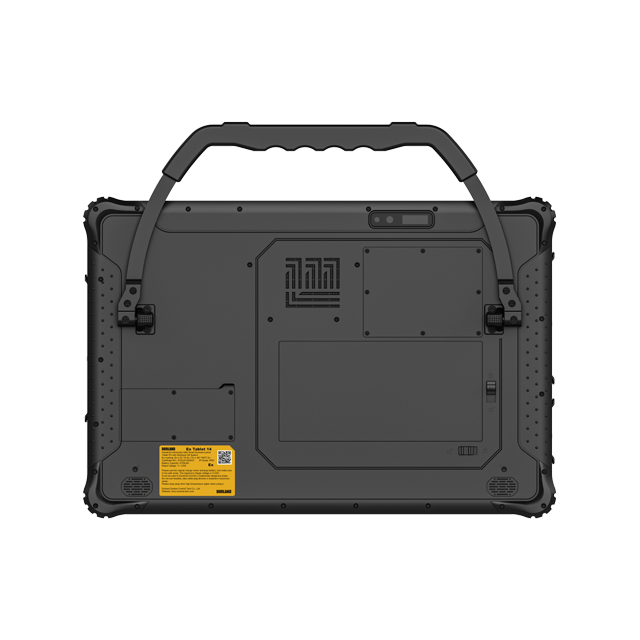
When you evaluate an Intrinsically Safe Laptop And Tablet PC, you will notice a trend. Many laptops and large tablets max out at Zone 2/22 (Category 3 / Gc). Achieving Zone 1 compliance for a 12-inch screen requires heavy, specialized enclosures. You must rigorously verify the exact Ex marking against user workflow locations. If a technician needs a laptop for a Zone 1 area, standard Zone 2 hardware will trigger an immediate compliance failure. Procurement must cross-reference screen size requirements with the facility's strictest zone mandates.
Selecting an Intrinsically Safe Handheld Terminal PDA
Logistics and chemical manufacturing depend on rapid data collection. Workers constantly scan barcodes in potentially explosive environments.
Selecting an Intrinsically Safe Handheld Terminal PDA involves assessing integrated optical components. High-cycle laser scanners generate heat and draw intense power bursts. These devices require strict adherence to both Gas and Dust Ex markings. A pharmaceutical warehouse might face heavy combustible dust risks (IIIC). A chemical loading dock might face volatile gas risks (IIC). Ensure the PDA carries a dual certification covering both hazards. This guarantees safe operation regardless of the data collection zone.
Even with a basic understanding of Ex markings, implementation traps exist. Avoiding these pitfalls protects your procurement investment and worker safety.
The Regional Certification Trap
A common mistake involves confusing regional certifications. An ATEX or IECEx marking demonstrates compliance in Europe and internationally. However, it does not automatically grant compliance in North America. North America relies on the NEC/UL Class and Division system. Despite deep technical similarities, you cannot legally mix them. Deploying an ATEX-only device in a facility demanding UL Class 1 Div 1 certification creates an immediate audit failure. Always verify local jurisdiction rules before approving a purchase order.
Accessories and Peripheral Limitations
You cannot evaluate core hardware in isolation. The Ex marking on a tablet does not cover connected peripherals automatically.
Wired Headsets: Must carry their own compatible Ex marking to prevent static discharge.
External Scanners: Bluetooth scanners need intrinsic safety validation matching the host device.
Replacement Batteries: You must only use vendor-approved, certified batteries. Third-party batteries instantly void the entire device's Ex rating.
You must evaluate the entire hardware ecosystem. Mixing a Zone 1 smartphone with uncertified headphones violates safety protocols instantly.
Label Degradation and Maintenance
Harsh environments destroy physical assets rapidly. Chemical spills, intense UV exposure, and abrasive dust wear away physical Ex labels. If an auditor cannot read the physical Ex marking, they consider the device non-compliant. This creates a severe operational risk. To combat label degradation, you need robust digital tracking. Integrate all device certificates into your Enterprise Asset Management (EAM) system. Digital records provide immediate backup proof during intense facility inspections.
Your Evaluation Checklist: Verifying Ex Markings Before Purchase
Use this actionable checklist to standardize your procurement process. Follow these exact steps before finalizing any hardware order.
Cross-Reference Site Documents: Obtain the official Hazardous Area Classification drawing from your EHS team. Match the facility’s exact zone, gas group, and temperature class strictly to the proposed device’s Ex string.
Demand the Certificate: Never rely solely on a vendor's marketing spec sheet. Marketing materials frequently oversimplify safety tiers. Mandate that the vendor provides the official ATEX or IECEx certificate. Review it for authenticity.
Verify the "X" Condition: Look closely at the end of the Ex marking string. If it ends with an "X", it indicates "Special Conditions for Safe Use." This might mean you must only charge the device outside the hazardous area. It could also mandate using a specific leather protective case. You must enforce these special conditions operationally.
Pilot Testing: Procure a single device unit first. Test its workflow compatibility, screen visibility, and battery life strictly within the defined Ex marking constraints. A pilot test identifies software integration issues before a massive, costly rollout.
Conclusion
Decoding an Ex marking serves as the foundational step in a defensible, safe procurement process. It translates highly complex environmental physics into clear hardware specifications. EHS teams and IT departments must align on these critical strings long before any hardware evaluations begin. Ignoring this alignment invites massive compliance risks and budget waste.
We recommend taking immediate action today. Audit your current facility classification maps alongside your EHS leaders. Catalog the specific Ex markings required for your operational zones. Finally, consult with an intrinsic safety hardware specialist to confidently shortlist compliant mobile devices. Doing so guarantees operational efficiency without ever compromising human safety.
FAQ
Q: What is the difference between an ATEX Ex marking and an IECEx marking?
A: ATEX is a mandatory legal directive required for operating equipment within the European Union. IECEx is an international certification scheme facilitating global trade. While technically similar in testing standards, ATEX holds legal weight in Europe, whereas IECEx acts as a standardized baseline widely accepted globally.
Q: Can a device with a Zone 2 Ex marking be used temporarily in a Zone 1 area?
A: No. You must never use a Zone 2 device in a Zone 1 area, even temporarily. Zone 1 environments pose a significantly higher explosion risk. Zone 2 devices lack the necessary fault tolerance and energy limitations to operate safely in Zone 1 conditions.
Q: What does the "X" at the end of an Ex marking mean on a smartphone or tablet?
A: The "X" indicates "Special Conditions for Safe Use." You must read the specific device certificate to understand these conditions. Common examples include strictly charging the device in non-hazardous safe zones or avoiding environments with high electrostatic charge risks.
Q: Does adding a rugged case change the Ex marking of a standard tablet?
A: Yes. Placing a standard, non-certified tablet into an uncertified rugged case does not make it intrinsically safe. Only certified cases tested as a complete assembly with the core device carry a valid Ex marking. Modifications instantly void existing safety certifications.