Balancing worker safety, strict ATEX/IECEx compliance, and operational efficiency often feels like a high-stakes balancing act for EHS and IT procurement teams. You need communication devices that keep your workforce connected without inflating budgets or compromising on site safety. Choosing the wrong device tier introduces severe risks. It can lead to catastrophic gas ignition, massive regulatory fines, and completely voided insurance policies. Conversely, blindly over-speccing your hardware drains capital and complicates your fleet management strategy. We understand how challenging it is to navigate these complex regulatory requirements.
This article provides an evidence-based evaluation framework to guide your purchasing decisions. We will translate complex hazardous area classifications into practical, scalable procurement strategies. You will learn the critical differences between Zone 1 and Zone 2 devices and understand the rigorous engineering behind them. Ultimately, we will help you align your site’s specific safety requirements with your broader enterprise IT roadmap.
Key Takeaways
Frequency Dictates Equipment: Zone 1 represents environments where explosive atmospheres are likely during normal operations; Zone 2 represents environments where they occur only under abnormal conditions (e.g., leaks).
Protection Mechanisms Differ: Zone 1 devices demand strict intrinsic safety (limiting thermal/electrical energy), whereas Zone 2 devices often leverage containment or increased safety measures.
TCO Varies Drastically: Procurement isn't just unit cost. Zone 1 devices carry higher initial certification and ongoing inspection costs compared to Zone 2 alternatives.
Future-Proofing is Critical: The transition from legacy systems to a modern 4G Intrinsically Safe Smartphone or 5G Intrinsically Safe Smartphone requires aligning device capabilities with MDM (Mobile Device Management) and IoT strategies.
Decoding the Operating Environment: Zone 1 vs. Zone 2 Realities
The Core Differentiator: Probability and Duration
Understanding hazardous areas requires you to look closely at probability. Regulatory bodies classify zones based on how often explosive gases or vapors appear and how long they stay. You cannot select the right equipment without mapping these operating realities.
Zone 1 (High-Risk Areas): These environments expect explosive gases or vapors to exist during routine operations. Think of areas immediately surrounding pressure relief valves, open loading hatches, or active pump seals. If a worker operates in a space where fumes are a normal byproduct of daily tasks, they stand in a Zone 1 area.
Zone 2 (Medium-Risk Areas): These zones sit adjacent to high-risk areas. Hazardous atmospheres do not occur here during normal day-to-day operations. They only emerge during systemic failures, such as a ruptured pipe, a broken seal, or an accidental spill. Typical Zone 2 locations include closed storage facilities or transit routes passing near active processing plants.
Global Standards Mapping
Standardizing global procurement demands a deep understanding of regional compliance overlaps. European and international frameworks rely on the ATEX and IECEx Zone system. North America uses the National Electrical Code (NEC) Division system. These frameworks do not align perfectly.
NEC Division 1 is a broader category. It encompasses the high-risk environments of both Zone 0 (continuous hazard) and Zone 1 (likely hazard). Meanwhile, NEC Division 2 directly maps to the IECEx Zone 2 classification. You must understand these overlaps to prevent cross-border compliance failures. Buying a device certified only for European Zone 1 does not automatically clear it for a North American Division 1 facility without proper localized certifications like FM or UL.
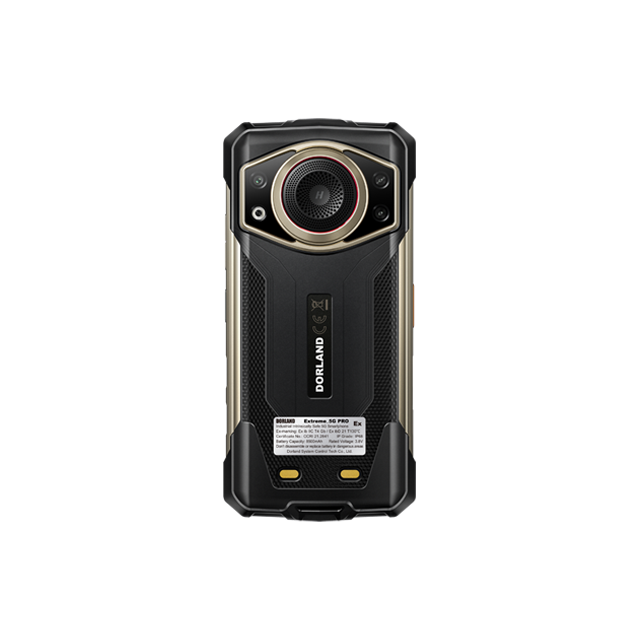
The Engineering Behind an Intrinsically Safe Smartphone
Intrinsic Safety (IS) vs. Explosion-Proof (Ex-Proof) Enclosures
Manufacturers use entirely different engineering philosophies to design devices for hazardous areas. You must choose between preventing sparks entirely or containing an inevitable explosion. An Intrinsically Safe Smartphone typically relies on the prevention strategy.
| | Comparison Chart: Intrinsic Safety vs. Explosion-Proof |
Feature | Intrinsic Safety (IS) Strategy | Explosion-Proof (Ex-Proof) Strategy |
Core Philosophy | Ignition prevention (restricts electrical/thermal energy). | Explosion containment (contains blast within the housing). |
Engineering Method | Uses zener diodes, resistors, and fuses at the circuit level. | Uses heavy ruggedized, sealed metal or reinforced housings. |
Weight & Form Factor | Generally lighter and slimmer. | Heavier, bulkier due to thick containment walls. |
Safety Under Faults | Remains safe even under dual-fault component conditions. | Relies entirely on the physical integrity of the outer seal. |
The Intrinsic Safety (IS) prevention strategy tackles the hazard at the circuit level. Engineers design the mainboard to severely restrict electrical current and voltage. By implementing a network of zener diodes, resistors, and physical fuses, the device caps electrical output. Even if the device suffers a catastrophic internal short-circuit, it cannot produce a spark hot enough to ignite ambient gases. This system ensures safety even under dual-fault conditions.
Conversely, the Ex-Proof containment strategy accepts that internal sparks will occur. Engineers design these devices to allow an internal gas ignition. However, they wrap the circuitry in a highly ruggedized, structurally sealed housing. This enclosure absorbs the blast and prevents thermal propagation. Flames and heat cannot escape to ignite the wider outside atmosphere.
Why Consumer "Rugged" Phones Fail the Test
Many procurement officers mistakenly believe heavy-duty, military-grade consumer phones provide adequate protection. They do not. "Rugged" describes physical durability against drops and water, not spark prevention. Deploying an uncertified rugged device introduces several distinct ignition hazards:
Battery Short-Circuits: Standard lithium-ion batteries lack stringent thermal capping. A puncture or aggressive drop can cause thermal runaway, immediately igniting the surrounding environment.
Surface Temperature Spikes: Modern consumer processors generate intense heat during heavy CPU loads (like video calling or processing large data sets). In hazardous zones, a hot device surface can exceed the auto-ignition temperature of ambient gases.
Explosive Gas Ingress: A dropped consumer phone might crack its screen or loosen its seals. Explosive gases easily seep into these cracks. The moment the user receives a notification, the internal vibration motor or speaker triggers a micro-spark, causing a catastrophic blast.
The Financial Equation: Compliance Economics and Lifecycle Burdens
Initial Procurement vs. Lifecycle Costs
Procurement extends far beyond the baseline unit price. When you evaluate hardware, you must weigh initial capital expenditure against long-term operational viability. Zone 1 hardware inherently commands a higher initial price point. Manufacturers spend millions on intense research, specialized circuit development, and rigorous third-party certification testing. Zone 2 hardware requires fewer extreme safety caps, making the baseline unit cost noticeably lower. However, buying the cheaper unit is a false economy if your workers routinely step into high-risk areas.
Maintenance and Inspection Burdens
Regulatory frameworks impose varying demands on equipment maintenance. Zone 1 equipment generally demands rigorous, specialized routine inspections. Safety auditors must verify that device enclosures remain uncompromised and that safety labels stay entirely legible. Zone 2 devices require inspections, but the regulatory frequency and depth often present a lower operational burden. You must factor these inspection hours into your overall maintenance overhead.
The Catastrophic Cost of Non-Compliance
You must frame device safety as a fundamental business continuity metric. The financial fallout of deploying a Zone 2 device in a Zone 1 area is devastating. If an auditor discovers this mismatch, authorities issue immediate shutdown orders. Plants face crushing OSHA or ATEX fines. Furthermore, if an uncertified device triggers an actual incident, insurance companies immediately void payout claims. The sheer cost of unplanned facility downtime far exceeds any savings gained by purchasing lower-tier hardware.
Buyer’s Evaluation Framework: Shortlisting the Right Device
Matching Connectivity to Site Infrastructure
Your procurement strategy must seamlessly integrate with your facility’s digital infrastructure. You need to evaluate current network readiness before purchasing a fleet. If your site relies on stable, widespread LTE networks for basic push-to-talk communication and digital forms, deploying a standard 4G Intrinsically Safe Smartphone is highly efficient.
However, modern plants are rapidly transitioning toward complex digital operations. If your IT roadmap includes high-bandwidth IoT edge computing, real-time video streaming for remote maintenance, and low-latency digital twin applications, you must plan ahead. Investing in a 5G Intrinsically Safe Smartphone future-proofs your workforce. It delivers the massive data throughput required to keep advanced digital transformation initiatives running smoothly in hazardous areas.
Decoding the Device Marking (Reading the Label)
Every certified device carries a highly specific specification tag. Procurement teams must know how to read these markings to ensure compliance. Consider a standard ATEX marking like Ex ib IIC T4 Gb.
| Breakdown of a Typical Ex Marking (Ex ib IIC T4 Gb) |
Marking Component | Meaning and Application |
Ex | Indicates the device conforms to international explosion protection standards. |
ib | Refers to the type of intrinsic safety protection. "ib" is certified for use in Zone 1 and Zone 2. |
IIC | Gas Group: Identifies the most dangerous gases (hydrogen/acetylene). It also covers IIA and IIB environments. |
T4 | Temperature Class: Guarantees the device surface will never exceed 135°C, staying below the gas ignition point. |
Gb | Equipment Protection Level (EPL): "G" stands for Gas, and "b" confirms a high level of protection suitable for Zone 1. |
The Gas Group and Temperature Class are paramount. Gas Group IIC covers the highest risk environments, containing highly volatile elements like hydrogen and acetylene. If a device holds a IIC rating, it legally covers less dangerous IIA and IIB gases. Similarly, the T-Class ensures the device's maximum surface temperature under heavy load sits well below the auto-ignition temperature of specific site gases.
IT and Workforce Integration
A device is useless if workers refuse to use it. You must assess enterprise usability. Look for devices carrying Android Enterprise Recommended (AER) status. AER ensures timely security patches and seamless integration with major Mobile Device Management (MDM) platforms. Furthermore, evaluate the peripheral ecosystem. Does the device support intrinsically safe push-to-talk headsets and attachable barcode scanners? Ensure the screen provides optimal gloved-touch usability, allowing workers to operate software without removing essential PPE.
Implementation Risks and Deployment Blind Spots
The Downward Compatibility Rule (and its trap)
Fleet management requires strict administrative controls. A fundamental rule of hazardous area certification is downward compatibility. Zone 1 devices can legally and safely operate in Zone 2 areas. Standardizing your entire fleet on Zone 1 hardware drastically simplifies compliance. However, the reverse is strictly prohibited: Zone 2 devices must never enter Zone 1.
If you operate a hybrid fleet, you face the severe risk of "device migration." Untrained or rushed workers might accidentally carry a Zone 2 device into a high-risk Zone 1 sector. You must implement aggressive physical management, color-coded lanyards, and geofencing software to prevent this compliance disaster.
Battery Limitations and Shift Management
Intrinsic safety physics enforce strict energy caps. Limiting electrical output inherently limits physical battery size and maximum power draw. You must address these physical realities when planning shift patterns. Workers cannot plug in a charger or swap a battery mid-shift while standing inside a hazardous zone. Exposing unsealed charging ports to ambient gas is highly illegal and incredibly dangerous. You must carefully plan for shift-long usage and invest in multi-bay charging stations located strictly in safe, non-hazardous administration areas.
Evaluating Vendor Credibility and Support
Hardware fails, screens crack, and software glitches. When evaluating vendors, prioritize credibility and post-purchase support over raw unit price. Demand proof of valid, up-to-date IECEx and ATEX certificates directly from recognized testing laboratories. Verify that the vendor offers robust local support. Finally, scrutinize their Return Merchandise Authorization (RMA) processes. Repairing hazardous environment equipment requires specialized technicians to maintain certification integrity; third-party mall repair shops cannot legally fix an intrinsically safe device.
Conclusion
Procuring mobile devices for hazardous environments requires balancing chemical realities with IT strategy. Let your facility’s specific gas presence, probability of exposure, and Temperature Class requirements dictate your foundational tier. Once you map the environment to Zone 1 or Zone 2, let your long-term enterprise connectivity roadmap dictate the specific model. Aligning with reliable 4G or advanced 5G infrastructure ensures your workforce remains connected and productive for years to come.
We highly recommend conducting a formal site hazard audit alongside a comprehensive IT network assessment before finalizing any bulk procurement order. Do not guess your risk profile. Engage directly with EHS officers to pinpoint exact zonal boundaries across your plant.
Take action today. Encourage your procurement stakeholders to request evaluation units. Consult with a certified explosion-proof equipment specialist to validate your specific site requirements and confidently deploy a compliant, efficient mobile fleet.
FAQ
Q: Can I use a heavy-duty, military-grade (MIL-STD) consumer phone in a Zone 2 area?
A: No. "Rugged" dictates physical durability, not spark prevention. Only legally certified Ex-devices are compliant.
Q: Is it more cost-effective to buy only Zone 1 phones for the entire plant?
A: It depends on workforce mobility. Standardizing on Zone 1 simplifies compliance and prevents accidental zone breaches, but significantly increases upfront capital expenditure and replacement costs. A hybrid fleet requires strict physical management.
Q: How does moving to a 5G Intrinsically Safe Smartphone impact battery life?
A: 5G modules draw more power, which presents an engineering challenge for IS devices that limit electrical output. Modern devices combat this with advanced thermal management and highly optimized chipsets, but buyers must verify tested shift-length duration.