Operating in high-risk environments like oil and gas, mining, and chemical processing requires zero-tolerance policies. You need strict safety measures alongside complete asset visibility. Yet, traditional manual tracking consistently fails due to extreme physical environment constraints. Legacy barcode systems require a clear line-of-sight. They become utterly useless when covered by dirt, mud, grease, or plunged into complete darkness. Furthermore, introducing standard consumer electronics into these highly volatile zones violates critical safety mandates.
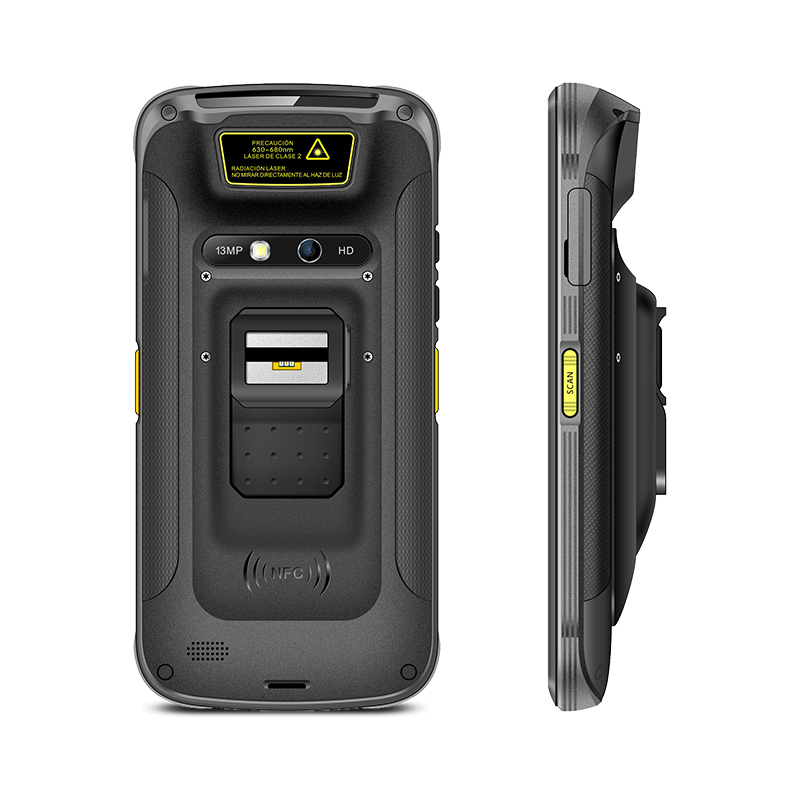
You can overcome these hurdles by deploying an Intrinsically Safe RFID architecture. Anchored by certified rugged PDAs, this specialized system bridges the gap between stringent safety compliance and high-fidelity operational data. It modernizes tracking, transforming weeks of manual inventory checks into just a few hours of accurate, automated auditing.
Key Takeaways
Compliance First: ATEX/IECEx-certified RFID PDAs allow for digital tracking in explosive or highly volatile environments without risking ignition.
Data Superiority: Transitioning to RFID in hazardous zones can elevate inventory accuracy baselines from ~65% to over 95%, while reducing audit times from months to days.
Hardware Synergy: Success relies on pairing passive/active specialized tags (flush-mounted for heavy metal assets) with high-powered handheld readers equipped with Dense Reader Mode (DRM) to prevent tag collision.
Beyond Inventory: Integrating RFID data with Real-Time Location Systems (RTLS) unlocks predictive maintenance (monitoring fatigue/wear) and automated EHS (Environment, Health, and Safety) compliance.
Evaluating Intrinsically Safe RFID Against Traditional Tracking Methods
Barcodes rely heavily on linear optical scanning. You must align a reader directly over a printed label. Extreme environments destroy this process rapidly. Heavy vibrations, complete darkness, corrosive chemicals, and thick mud easily block optical paths. Field workers cannot pause operations to wipe down every drill pipe simply to scan a barcode.
Radio Frequency Identification (RFID) changes this dynamic entirely. Instead of struggling with concurrent linear scanning, readers capture hundreds of tags per second. The RF signal penetrates grease, dirt, and water effortlessly. You simply walk through a yard and gather granular data instantly.
This operational leap creates verifiable business metrics. Consider a typical oilfield pipe yard audit. A standard manual process might require a three-person team working eight hours to complete. By switching to advanced RF technology, a single operator can audit the exact same yard in just 45 minutes. You drastically reduce labor hours and simultaneously eliminate manual data entry errors.
Automated, time-stamped digital trails also guarantee strict audit readiness. Regulatory bodies, such as ISO auditors or DoD compliance officers, demand a precise history. By removing human transcription errors, you ensure every log accurately reflects reality.
The Role of Certified PDAs in Explosive Environments
Explosive atmospheres demand specialized hardware. Devices operating in these zones must carry ATEX and IECEx certifications. These global standards verify a device remains "intrinsically safe." Manufacturers engineer these specific devices to restrict internal electrical and thermal energy. They cannot generate a spark or reach a temperature high enough to ignite volatile gases or dust.
Ergonomics directly impact field usability. Industrial PDAs often feature specialized trigger grips. These grips reduce wrist fatigue during long, demanding shifts. More importantly, they frequently house larger integrated antennas. This extension can push the reliable read range up to 30 feet. Operators can scan critical mission environments safely from a distance, avoiding unnecessary physical hazards.
Some premium rugged PDAs also feature a dedicated "sonar mode." It provides rapid acoustic feedback to locate hidden or visually obstructed assets. As you walk closer to a specific tagged item, the PDA beeps faster. It works perfectly for finding submerged tools, buried valves, or misplaced equipment in chaotic yards.
Reliable battery and processing resilience remain equally vital. Remote zones like offshore rigs or underground mines often lack stable network connectivity. Your PDA must run offline seamlessly. It requires extended-shift battery life and robust local computing power to process thousands of tag reads before syncing back to the central mainframe.
Tag Selection Criteria for HPHT and Heavy Metal Assets
Choosing the right tag determines system success. High Pressure High Temperature (HPHT) zones destroy standard adhesive labels. You must evaluate active versus passive tags carefully to match your specific asset needs.
Passive tags cost very little. They draw power entirely from the reader's emitted signal. You should deploy them for bulk consumables and standard drill pipes. Active tags contain internal batteries. They broadcast their own signal continuously over much longer distances. Because they cost significantly more, you should reserve them for high-value mobile equipment and RTLS (Real-Time Location Systems).
Active vs. Passive Tag Comparison Chart
Tag Feature
Passive RFID Tags
Active RFID Tags
Power Source
Reader signal (No internal battery)
Internal battery
Cost Profile
Low (Pennies to a few dollars)
High ($20 - $40+ per tag)
Read Range
Short to Medium (Up to 30 feet)
Long (Up to 300+ feet)
Ideal Use Case
Drill pipes, hand tools, consumables
Heavy machinery, vehicles, RTLS safety zoning
Metal and liquid severely interfere with RF signals. Metal reflects waves, causing frustrating dead zones. Liquid absorbs RF energy, killing the read range. Modern industrial tags overcome this physical reality through clever engineering. Specialized on-metal tags actually utilize the asset's own metal body as an extended antenna to amplify the signal outward.
Physical mounting strategies require strict attention. You cannot compromise the structural integrity of lifting rigging or heavy drill bits.
Common Mistake: Using standard industrial adhesive on HPHT assets. The extreme heat melts the glue, causing immediate tag loss within days.
Instead, follow these highly resilient mounting strategies:
Flush-mounting: Mill a shallow recess into a thick metal joint and set the tag inside securely with heat-resistant industrial epoxy.
Welding: Use custom metal tag brackets welded directly to non-critical sections of the asset.
Metal-banding: Strap tags tightly to tubular goods (like OCTG) using heavy-duty stainless steel ties.
Mitigating Risks in an RFID Asset Tracking Hazardous Area Deployment
Executing an RFID asset tracking hazardous area deployment introduces unique physical and digital challenges. High tag density often causes signal collision. When hundreds of stacked tags respond simultaneously, older readers get overwhelmed and drop crucial data. You handle this by enabling Dense Reader Mode (DRM). DRM uses advanced processing algorithms to separate competing signals, completely preventing data loss in crowded pipe yards.
Enterprise security vulnerabilities demand immediate attention as well. Unencrypted RF signals invite interception, tag cloning, and malicious spoofing. Bad actors could theoretically alter a tag's digital signature to disguise failed equipment as operational. We strongly recommend using encrypted data protocols alongside tamper-evident tag designs. If someone tries to peel off a tamper-evident tag, the internal micro-antenna breaks instantly, permanently disabling the chip.
System redundancy prevents operational paralysis. You should advocate for a dual-system approach. Combining RF chips with deeply etched 2D barcodes creates an incredibly reliable fail-safe. If temporary environmental factors jam the radio signals, field workers can still scan the 2D barcode to retrieve vital maintenance history.
Integration, Scaling, and Next Steps for Operations Leaders
Technology alone will not fix broken tracking processes. You need a highly structured deployment strategy. Pre-deployment site surveys are absolutely necessary. You must conduct extensive physical RF environment testing. This testing accurately maps out dead zones and identifies heavy liquid or metal reflection points long before you launch a full-scale rollout.
Best Practice: Always map out RF dead zones during peak operational hours. Moving metal equipment, like active forklifts and cranes, alters signal reflection patterns dynamically.
Field data collected from PDAs must flow seamlessly into your backend architecture. WMS (Warehouse Management System) and ERP synchronization unlock the true value of the hardware. For example, when a drill pipe reaches a specific physical usage threshold, the system should automatically trigger a maintenance work order without human prompting.
Selecting the right hardware partner accelerates your success. Use the following logic checklist when evaluating potential vendors:
Verify Certifications: They must provide authentic, up-to-date ATEX or IECEx certificates for all handhelds.
Request Field Kits: The vendor should readily supply field testing kits to validate read ranges directly in your actual environment.
Assess Industry Knowledge: They must understand specific heavy-industry workflows, not just basic retail logistics.
Evaluate SDK Support: Ensure they offer robust software development kits to integrate the hardware smoothly with your existing ERP ecosystem.
Conclusion
An intrinsically safe RFID system represents much more than a simple inventory upgrade. It serves as a foundational digital layer for transformation in high-risk, heavily regulated sectors. By upgrading from fragile barcodes to robust RF tracking, you elevate accuracy and protect your workforce simultaneously.
While this technology delivers exceptional speed and potential 99%+ accuracy, you must remain objective. Success hinges entirely on rigorous site surveys and precise calibration. You must select hardware explicitly certified for your specific operational reality.
Take proactive steps today. EHS and Operations Directors should immediately request a comprehensive RF site assessment. Run a pilot program using a certified PDA in a controlled hazardous zone to witness the data clarity firsthand.
FAQ
Q: What is the difference between standard RFID and Intrinsically Safe RFID?
A: Standard readers process signals without power restrictions. Intrinsically safe devices feature a strict power-limiting design. Engineers specifically design the reading hardware to restrict internal electrical and thermal energy. This prevents the device from generating sparks or heat, keeping operators completely safe in ATEX-certified explosive zones.
Q: How accurate is RFID asset tracking in areas with heavy metal infrastructure?
A: Heavy metal creates severe signal reflections and dead zones. However, you can achieve 99% accuracy by deploying specialized on-metal tags. These clever tags use the asset's metal structure as an antenna amplifier. You must also combine this with proper reader calibration and extensive field testing.
Q: Can RFID tags survive downhole or HPHT (High Pressure High Temperature) conditions?
A: Yes. Manufacturers create custom form factors designed specifically for these harsh extremes. They encase internal chips in ultra-rugged, heat-resistant materials. These customized tags withstand drill mud, corrosive chemicals, and extreme downhole pressure without experiencing signal death.
Q: Does RFID replace standard barcode labels entirely?
A: No. Best practices advise maintaining dual technologies for system redundancy. You should combine rugged RF chips with deeply etched 2D barcodes. This ensures operational fail-safes are always in place, which remains critical in military or highly regulated industrial applications.