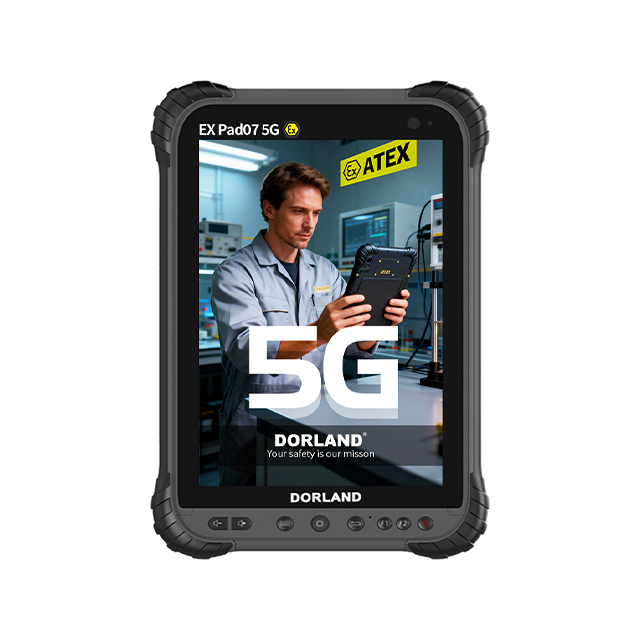
Industrial operators face a severe bottleneck today. Control rooms run advanced SCADA systems safely inside. But field technicians work in potentially explosive atmospheres. Environments like oil and gas refineries, chemical plants, and underground mines require strict safety protocols.
Standard rugged devices create dangerous ignition risks. They are completely unacceptable in ATEX or IECEx-regulated zones. Relying on paper-based reporting ruins operational efficiency. Constantly walking to safe zones destroys your real-time response capabilities. Plant managers cannot afford these communication delays during critical pressure drops or pump failures.
Deploying a certified Intrinsically Safe Tablet PC solves this problem directly. It allows secure HMI access at the hazardous site. You never compromise safety protocols. This guide breaks down the critical criteria you need. You will learn the technical, operational, and compliance rules. We will show you how to select an intrinsically safe tablet for SCADA architecture correctly. You will avoid costly misconfigurations and regulatory violations.
Key Takeaways
Rugged ≠ Intrinsically Safe: MIL-STD-810H physical durability does not prevent electrical sparks or thermal ignition; true intrinsic safety requires strict energy limitations (Ex i) or flameproof enclosures (Ex d).
SCADA Interoperability dictates the OS: Your choice between Windows and Android depends entirely on your existing SCADA ecosystem (legacy drivers vs. modern web-based clients like Ignition or AVEVA).
Performance vs. Compliance Trade-offs: Zone 1/21 environments strictly limit battery capacity and processor power to prevent heat generation, impacting screen brightness and CPU speed.
Peripheral Compliance is Mandatory: Plugging a standard, uncertified USB-C hub or using a non-compliant stylus immediately voids the device's ATEX/IECEx certification.
The Business Case: Why Rugged is Not Enough for Hazardous SCADA Access
Many procurement teams make a critical error during hardware upgrades. They mistakenly equate "military-grade rugged" with "explosion-proof." These are entirely different concepts. Rugged specifications, such as MIL-STD-810H, focus purely on physical survivability. Engineers test them for drops, vibrations, and water ingress. Intrinsic Safety focuses strictly on preventing ignition. An intrinsically safe tablet cannot generate electrical sparks. Its surface temperature cannot exceed highly specific safe limits, even under fault conditions.
You achieve massive operational agility by deploying these specialized devices. Think of this hardware as a mobile SCADA node. It empowers field operators completely. They can acknowledge critical alarms instantly. They can modify PLC parameters on the spot. They view real-time pipeline and tank telemetry without leaving the hazardous zone. This direct intervention eliminates dangerous delays. It bridges the historical gap between the control room and the physical valve.
Field control engineers frequently report harsh realities regarding consumer hardware. Standard devices fail dangerously in extreme industrial conditions. Standard lithium-ion batteries swell under intense heat. Screens shatter easily at -20°C. Cold environments drain standard batteries in minutes. These failures represent severe liabilities in a active refinery. You need equipment built explicitly for hazardous areas. Certified equipment mitigates these risks proactively.
Architecture & OT Integration: Connecting to SCADA Systems
Selecting the right operating system forms the foundation of your OT integration. Windows 10/11 remains necessary for legacy SCADA systems. Many older plants rely on local fat clients. You might need specific serial interface drivers for older PLCs. Windows handles these legacy requirements perfectly. Android offers different advantages. It is ideal for modern, agile environments. Android works flawlessly with mobile dashboards. It excels when running IIoT web interfaces like Ignition or AVEVA Edge.
The tablet must process industrial communication protocols smoothly. Look for native support for Modbus TCP, OPC UA, and MQTT. OPC UA creates a highly secure data tunnel. MQTT is lightweight and perfect for intermittent cellular connections. Do not rely on flimsy consumer adapters. Retained native I/O interfaces, such as RS232 or RS485, offer immense value. They ensure stable data transfer in high-interference zones. Native ports prevent the mechanical failures associated with dongles.
We strongly recommend deploying your software via Thin Client architecture. Solutions like ThinManager are excellent for this purpose. Secure web-based platforms also work exceptionally well. This setup prevents sensitive localized data loss. If a worker drops the device into a chemical tank, your corporate data remains safe. The tablet simply acts as a secure viewing glass. You avoid devastating IT security breaches. Centralized management allows IT to lock down terminals remotely.
Hardware Evaluation Framework: Ex i vs. Ex d Technical Pathways
You must balance computing power with explosion-proof ratings. This balance is essentially a zero-sum game. Buyers often over-specify their needs. They demand maximum performance in maximum hazard zones. This is physically impossible under current safety physics. You must align your selection with actual Zone requirements.
Path A represents true Intrinsic Safety (Ex i). This method limits thermal and electrical energy below ignition thresholds. It relies on internal Zener barriers and precise resistors. The reality involves necessary compromises. You get lower-power CPUs. Battery capacities are heavily restricted, often falling below 2.5Wh per cell. Screens might be noticeably dimmer to save power. We recommend Path A for Zone 1/21 environments. These are areas where explosive hazards are frequently present during normal operations.
Path B utilizes Flameproof or Encapsulated methods (Ex d / Ex m). Manufacturers use heavy-duty metal or composite enclosures. These cases contain an internal explosion safely. The reality here is much different. You get "full-blooded" performance. You can specify i5 or i7 processors. 5G connectivity and ultra-bright screens are fully supported. However, the unit becomes significantly heavier and bulkier. This path suits Zone 2/22 areas. Hazards in these zones are abnormal or rare.
Feature Category
Ex i (Intrinsically Safe)
Ex d / Ex m (Flameproof/Encapsulated)
Target Environment
Zone 1 / 21 (Frequent Hazard)
Zone 2 / 22 (Rare/Abnormal Hazard)
Protection Mechanism
Limits energy to prevent sparks/heat
Contains internal explosions structurally
Processing Power
Restricted (Low-heat CPUs)
High (Standard i5/i7 available)
Device Weight & Profile
Lighter, slimmer form factor
Heavier, bulkier reinforced casing
Screen Brightness
Moderate (power-limited)
Ultra-bright (800+ nits common)
Field Realities: Ergonomics, Power, and Extreme Environments
Field engineers demand excellent screen usability. They read complex AR overlays in direct sunlight. They study dense SCADA schematics outdoors. Screens must output more than 800 nits of brightness. Dim screens lead to critical reading errors. Capacitive touch panels must function perfectly under harsh conditions. Workers wear heavy nitrile safety gloves constantly. They operate touchscreens in driving rain. Specialized digitizer tuning makes this possible.
Power management presents a unique challenge in hazardous areas. You cannot plug devices into wall chargers inside Zone 1 or Zone 2. Taking devices back to safe zones disrupts workflows. Hot-swappable batteries are a non-negotiable feature. They provide a small internal bridge battery. This keeps the device powered for roughly 60 seconds. Technicians swap the main battery without rebooting the OS. This workflow covers full 8-to-12-hour shifts seamlessly.
Corporate compliance extends beyond explosion prevention. Security and privacy regulations are equally rigid. Camera-free variants are often mandatory. Highly classified petrochemical sites demand them to prevent espionage. Proprietary manufacturing sites protect their Intellectual Property strictly. Standard tablets with epoxy over the camera lens often fail audits. Factory-level camera removal provides the only guaranteed compliance.
Hidden Pitfalls: Compliance, Cost, and Maintenance Risks
Many organizations fall into the peripheral trap. ATEX and IECEx certifications apply to the entire system assembly. You cannot simply attach standard consumer accessories. Connecting uncertified barcode scanners ruins your compliance instantly. Adding unauthorized RFID readers or lanyards invalidates the safety certificate. Even plugging in an unapproved USB-C charging dock introduces severe legal liabilities. If an incident occurs, uncertified peripherals destroy your insurance coverage.
Procurement teams need realistic budget expectations. Specialized engineering drives these prices higher than standard rugged gear. Standardizing your budget prevents project delays later.
Zone 2/22 (Android): Expect approximately $1,400 to $4,500. This provides modern connectivity with basic hazard protection.
Zone 2/22 (Windows/Flameproof): Expect roughly $8,000 to $15,000+. You pay for heavy encapsulation and desktop-grade processing.
Zone 1/21 (Maximum protection): Expect to spend $17,000+. This reflects the intense lab testing required for Ex i certification.
Maintenance mandates are strict and legally binding. Intrinsically safe devices require mandated annual visual inspections. Safety officers look for micro-cracks in the chassis. They inspect rubber seals for chemical degradation. You cannot perform unauthorized repairs on site. Third-party battery replacements are strictly prohibited. These actions destroy the integrity of the Ex rating. You must use certified repair centers to maintain compliance.
Conclusion
Selecting the right hardware requires harmonizing IT/OT software needs with strict EHS hardware limitations. You cannot treat this as a standard IT procurement exercise. The stakes involve physical plant safety and regulatory compliance.
Follow a strict shortlisting logic to ensure success:
Identify the exact Hazardous Zone classification. Map your physical plant areas accurately before looking at hardware.
Determine the SCADA OS/Protocol requirement. Decide if you need legacy Windows drivers or modern Android web clients.
Select the hardware footprint. Choose between the lightweight limits of Ex i or the heavier performance of Ex d.
Advise your decision-makers to conduct a joint site audit immediately. Involve both EHS officers and SCADA integrators before issuing RFPs. This collaborative step ensures the selected hardware matches both safety zoning and network infrastructure perfectly.
FAQ
Q: Can I use a military-grade rugged tablet in a Zone 1 hazardous area?
A: No. Rugged specifications (MIL-STD) ensure durability against physical shock and water, but they do not prevent the device from generating static sparks or exceeding safe surface temperatures. Only ATEX/IECEx/Class I Div 1 certified devices are legal in Zone 1.
Q: How do intrinsically safe tablets connect to legacy SCADA systems?
A: They typically connect via secure, private Wi-Fi or 4G/5G LTE networks. They utilize thin-client virtualization (like ThinManager) or secure web gateways. This allows them to access the SCADA network without hosting local proprietary data on the device itself.
Q: Why are Zone 1 tablets significantly more expensive than standard industrial tablets?
A: The cost reflects the intense engineering required to limit internal current and thermal output. It covers specialized encapsulation of components. It also funds the rigorous, expensive third-party certification processes (ATEX/IECEx) required to guarantee zero ignition risk.