Hazardous area maintenance presents a fundamental conflict for facility managers globally. You need precise, real-time asset data to maintain peak operational efficiency. Yet, you must strictly follow the rigorous safety constraints of explosive environments. ATEX, IECEx, and UL designated zones tolerate absolutely zero operational errors. Legacy processes carry a heavy operational burden every single day. Manual data entry and paper-based audit trails waste highly valuable time. They also extend technician exposure times in dangerous zones unnecessarily. Intrinsically Safe Barcode Scanners serve as the perfect operational bridge. They connect modern digital maintenance workflows directly to uncompromising safety compliance. You can now feed predictive maintenance ecosystems safely and accurately. This article provides an objective evaluation of these specialized devices. We explain exactly how these scanning mechanisms actually work in reality. We will guide you on selecting the proper form factor for your specific environment. Finally, you will learn how to implement them perfectly without disrupting existing protocols.
Key Takeaways
Transitioning to intrinsically safe scanning reduces technician exposure time and eliminates manual data entry errors in hazardous zones.
Effective implementation relies on matching device specifications (e.g., extended range, robust 2D decoding) to specific environmental constraints like physical barriers and PPE.
Compliance is non-negotiable; selecting equipment mapped to exact Zone (0, 1, or 2) definitions prevents catastrophic incidents and regulatory penalties.
The Hidden Costs of Manual Maintenance in Explosive Environments
Paper-based maintenance logs create compounding inefficiencies across your entire facility. Operators often use non-compliant devices just outside safety boundary lines. They do this simply to avoid tedious handwritten paperwork. This risky practice causes severe data delays and creates massive operational gaps. When technicians manually transcribe data, they introduce human errors constantly. A transposed serial number ruins an entire maintenance record immediately. You lose visibility over critical equipment health statuses.
Delayed data severely compromises your asset integrity tracking efforts. It makes maintaining undeniable audit trails nearly impossible. Mining operations face continuous threats from combustible coal dust daily. Oil and gas rigs deal with volatile methane gas pockets constantly. These operations depend entirely on accurate, instantaneous compliance records. You simply cannot afford missing or incorrect data logs. Regulatory bodies penalize facilities heavily for broken or delayed audit trails.
Deploying standard ruggedized devices in explosive atmospheres invites absolute disaster. You might think ruggedized means safe for all industrial uses. However, consumer-grade rugged devices completely lack critical thermal and electrical fail-safes. Standard devices do not utilize Zener barriers to restrict current flow. They lack advanced hotspot prevention circuits entirely. They can easily generate internal sparks during a simple short circuit. A dropped rugged tablet might not break, but its battery could spark. Many catastrophic safety incidents happen because facilities mistake ruggedness for true intrinsic safety. You must recognize these severe risks immediately.
How Intrinsically Safe Barcode Scanners Transform Asset Workflows
Intrinsic safety provides crucial dual-protection for volatile hazardous environments. It strictly restricts electrical energy to prevent accidental sparks. It also restricts thermal energy to prevent dangerous surface temperatures from developing. The device remains completely safe even under severe internal fault conditions. Engineers design these units to operate safely even if smashed physically.
Advanced optics easily overcome extreme physical site constraints daily. Technicians often face assets locked securely behind anti-spark mesh enclosures. Explosion-proof glass also blocks physical access to critical asset tags. A high-performance 2D Barcode Scanning Engine captures data through these physical barriers easily. You never have to break safety seals to scan tags. The optical sensors adjust automatically to read through thick, dirty partitions. They filter out reflections from shiny metal pipes automatically.
Extended range capabilities offer immense operational and safety benefits. You can read asset tags on high warehouse racks easily. You can scan drilling rig equipment directly from the ground level. Some advanced models scan accurately up to 12 meters away. This completely eliminates the need for temporary scaffolding setups. You also skip the lengthy hassle of securing height-work permits. This saves hours of preparation time for simple inventory checks.
Personal protective equipment (PPE) creates significant handling challenges for workers. Operators wear heavy chemical-resistant gloves in chemical processing zones constantly. They need hands-free or ergonomically designed triggers for reliable operation. Modern scanners ensure easy operation regardless of cumbersome safety gear. Big buttons and tactile vibration feedback confirm successful scans instantly.
Evaluation Dimensions: Selecting the Right Scanner for Your Zone
You must match your device perfectly to the specific operational area. Zone 1 requires distinct protection levels compared to Zone 2. In Zone 1, explosive gases are likely to occur during normal operations. Your equipment must guarantee complete ignition prevention under these exact conditions. Using a Zone 2 certified device in a Zone 1 area is strictly illegal. It exposes your facility to extreme danger.
Form factor and modularity dictate your daily usability and efficiency. Basic handheld scanners capture raw visual data very quickly. Comprehensive smart readers do much more than simple barcode scanning. They decode complex matrix codes and integrate RFID capabilities seamlessly. Network-poor zones complicate data transfer significantly in large industrial facilities. Bluetooth and wireless models offer great flexibility for highly mobile workers. However, tethered units never lose connection to their base stations. Assess the practical trade-offs of Bluetooth connectivity against physical cable limitations.
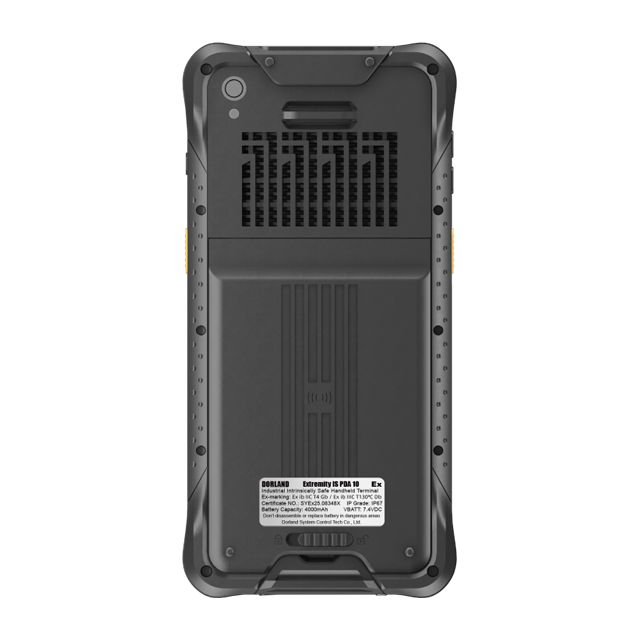
Consider exactly how your scanner feeds data into broader digital systems. You should evaluate the transition from isolated standalone scanning systems. An intrinsically safe barcode scanner pairs seamlessly with an IS tablet. These combinations provide rich, contextual maintenance data for your teams. They link directly with environmental sensors to improve overall facility safety.
Follow these critical steps when evaluating your deployment environment:
Identify the precise ATEX or IECEx zone classification for the target area.
Determine the primary data capture format needed daily (1D, 2D, or RFID).
Evaluate the existing wireless infrastructure availability in the targeted zone.
Assess the specific PPE worn by your daily scanning operators.
Map the data integration path to your central CMMS software.
Comparison: Scanners vs. Readers in Hazardous Zones
Feature Category
Basic Handheld Scanners
Comprehensive Smart Readers
Data Processing
Captures raw visual data only.
Decodes complex matrix formats locally.
Technology Integration
Limited to 1D or standard 2D codes.
Integrates RFID and OCR capabilities easily.
Ecosystem Connection
Often requires tethering to local terminals.
Pairs via secure Bluetooth to IS tablets.
Primary Use Case
Simple inventory checks and tracking.
Advanced reverse logistics and compliance audits.
Budgeting and Compliance: Understanding the Investment
Pricing expectations require clear transparency for accurate operational planning. Basic ATEX-certified models typically start around $900 to $1,500. These units serve lightweight warehousing and simple logistics applications perfectly. Modular RFID and scanner hybrids easily scale beyond $2,500 based on features. Full mobile intrinsically safe terminals cost slightly higher but offer complete computing solutions. You get what you pay for regarding safety certifications.
You must shift focus to long-term operational ROI success criteria. Measure success through the drastic reduction in manual administrative processing time. Track the decreased accident risks and eliminated safety incidents meticulously. Accurate scanning heavily optimizes your bulk inventory transfers across zones. Precise reverse logistics become a standard, flawless practice for your teams. This precision is absolutely crucial in pharmaceuticals and chemical processing operations. Faster, more accurate audits mean less downtime for critical production lines.
Standardizing certification across regions prevents massive compliance headaches later. You should always verify multi-region certifications before purchasing bulk hardware. Look for ATEX compliance if operating anywhere in the European Union. Confirm IECEx certifications for global deployment requirements and broad standardization. North American sites require strict Class and Division hazard ratings. Check these specific ratings carefully if deploying across multinational corporate sites.
Global Certification Standardization Overview
Regulatory Body / Standard
Primary Geographic Region
Key Classification Terminology
ATEX Directive
European Union
Zones (0, 1, 2) for Gases; (20, 21, 22) for Dust
IECEx System
Global / International
Equipment Protection Levels (EPL: Ga, Gb, Gc)
UL / NEC (Class/Division)
North America
Classes (I, II, III) and Divisions (1, 2)
Implementation Roadmap and Rollout Risks
Pilot testing prevents major deployment failures before they happen. Poor facility lighting and highly reflective surfaces cause severe scanning issues. You should test the scanner's adaptive illumination on-site immediately. Evaluate the dual-LED performance in real-world plant conditions carefully. Test scanning angles on curved pipes and dirty metallic surfaces. This ensures the hardware meets your exact environmental demands.
Integration with legacy software systems demands proper technical planning upfront. You need robust APIs or SDKs to push data seamlessly. They connect your devices into existing CMMS or ERP platforms securely. Modern facilities rely on platforms like SAP or IBM Maximo daily. Your new scanners must speak the same digital language seamlessly. Middleware software often bridges the gap between hardware and legacy databases. This prevents the creation of isolated data silos entirely.
Change management directly affects your long-term rollout success. Operators used to legacy workflows often resist new hardware fiercely. Emphasize the importance of comprehensive user training early on. Show them how green-laser aiming tools make jobs much easier. Highlight ergonomic handling to drive rapid system adoption naturally. Explain clearly how the new system reduces their time spent in danger zones.
Routine maintenance keeps your safety ratings intact over time. These devices are intrinsically safe, but physical wear occurs inevitably. Scratched lenses and degraded battery seals compromise safety certifications immediately. Establish a strict routine inspection protocol before full deployment.
Common implementation mistakes to actively avoid include:
Failing to test scanning performance through dirty explosion-proof glass.
Ignoring worker feedback regarding thick glove compatibility and trigger stiffness.
Deploying Bluetooth models in areas heavily shielded by thick metal structures.
Forgetting to schedule bi-annual professional inspections of device battery seals.
Assuming a Zone 2 device can briefly enter a highly volatile Zone 1 area.
Conclusion
Intrinsically safe barcode scanners are not merely regulatory compliance tools. They operate as essential workflow optimizers for high-risk maintenance scenarios. They eliminate manual data entry errors completely and reliably. They protect your workforce efficiently by reducing danger zone exposure.
We strongly recommend mapping out your exact facility hazard zones first. Conduct a thorough site audit immediately to assess your needs. Determine whether an extended-range, modular, or hybrid scanning solution fits best.
Consult with a specialized hazardous area hardware expert today. Request a demo unit for field testing to experience the benefits directly. Take the necessary steps to digitize your dangerous environments safely.
FAQ
Q: What is the difference between a ruggedized scanner and an intrinsically safe barcode scanner?
A: Ruggedized means the scanner is physically durable against severe drops and water ingress. Intrinsically safe means it is specifically engineered to prevent electrical and thermal ignition. Ruggedized devices can still create internal sparks during a short circuit. Intrinsically safe devices restrict energy to prevent explosions in hazardous atmospheres entirely.
Q: Can an intrinsically safe scanner read 1D and 2D codes through dirty or damaged labels?
A: Yes, they certainly can. A modern 2D Barcode Scanning Engine utilizes advanced error correction algorithms. It features adaptive focus designed specifically for harsh industrial environments. These engines can easily reconstruct missing data points from damaged or smudged labels.
Q: How do Bluetooth intrinsically safe scanners communicate in areas with poor Wi-Fi?
A: They pair directly with local communication base stations via secure Bluetooth. If the connection drops, many models utilize batch-mode memory capabilities. They store thousands of barcode scans locally on the device. They upload the offline data automatically once the worker returns to a connected safe zone.
Q: Does dropping an intrinsically safe scanner void its safety certification?
A: It can, depending on the severity of the physical damage. High IP ratings protect them from typical industrial impacts. However, deep cracks, broken lenses, or compromised battery seals ruin intrinsic safety. You must remove damaged devices from hazardous zones immediately for professional recalibration and safety inspection.